In this guide, we break down real dumpster rental prices for home renovations, based on what we’ve seen homeowners face during remodel cleanouts. You’ll learn what’s typically included, what fees to watch for, and how to choose the right dumpster size so you don’t overpay or end up needing a second haul.
TL;DR Quick Answers
dumpster rental prices
Most dumpster rentals for home renovation projects cost $300–$850+. The final price usually comes down to dumpster size, weight limit, debris type, rental length, and local landfill fees. At Jiffy Junk, we see the biggest cost surprises come from overweight loads (tile, drywall, roofing, concrete) because the dumpster can hit its weight cap before it looks full. For the best value, choose the right size upfront and confirm the weight allowance + overage fees before booking.
Top Takeaways
Typical price range: $300–$850+ for most renovation dumpster rentals
Weight is the #1 cost surprise: Heavy debris can trigger overage fees fast
What’s included varies: Always confirm delivery, pickup, rental period, and weight limit
Hidden fees exist: Overweight, overfill, extended rental, restricted items, permits
Best money-saver: Pick the right size and weight allowance upfront
Dumpster Rental Prices for Home Renovation Projects
Home renovation projects create more debris than most homeowners expect. From drywall and flooring to cabinets and old fixtures, waste piles up quickly, and that’s where a dumpster rental can save time, stress, and repeated dump runs. But how much should you budget?
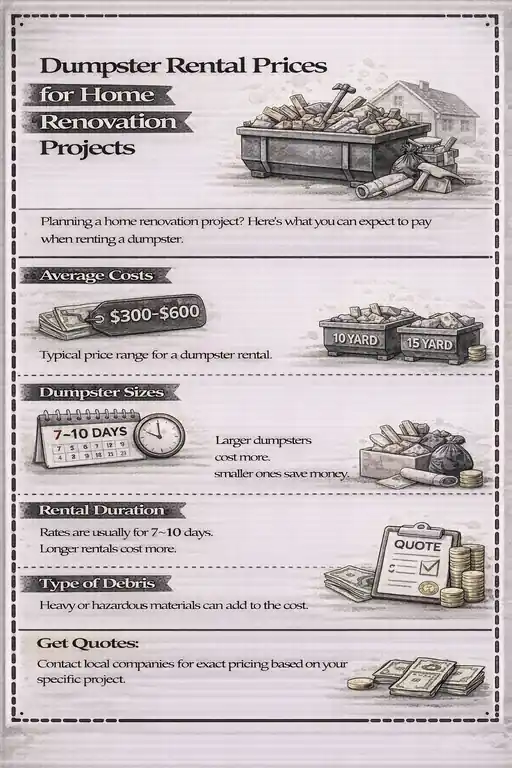
Dumpster rental prices for home renovation projects typically fall between $300 to $850+, depending on the dumpster size, debris type, weight limits, and your local disposal costs. Below is a clear breakdown of what impacts pricing, what you can expect to pay, and how to avoid common cost surprises.
Average Dumpster Rental Prices for Renovation Debris
Most dumpster rentals are priced as a flat rate package that includes delivery, pickup, a set rental period, and a weight allowance.
Here’s a general pricing range homeowners commonly see:
10-yard dumpster: $300–$500 (small bathroom remodels, small cleanouts)
20-yard dumpster: $450–$650 (kitchen remodels, flooring removal, medium renovations)
30-yard dumpster: $600–$800 (large remodels, multiple rooms)
40-yard dumpster: $750–$1,000+ (whole-home renovations, major construction debris)
Tip from Jiffy Junk: In our experience, many renovation projects underestimate how fast debris adds up, especially once demolition starts. When in doubt, sizing up can prevent needing a second dumpster (which often costs more than choosing a slightly larger one upfront).
What Impacts Dumpster Rental Cost During a Remodel?
Dumpster pricing isn’t random. These are the most common factors that change your final quote:
Dumpster Size
Larger dumpsters cost more because they hold more debris and require larger hauling equipment.
Weight Limit and Debris Type
Heavy materials can raise costs quickly. Items like roofing shingles, tile, concrete, plaster, drywall, dirt, bricks, or masonry can exceed weight limits faster than expected, triggering overage fees.
Rental Duration
Most rentals include 7–10 days. Keeping the dumpster longer may add daily or weekly charges.
Location and Local Dumping Fees
Landfill fees vary by city and county. Some areas have higher disposal costs due to fuel rates, transfer station fees, or environmental regulations.
What’s Typically Included in Dumpster Rental Pricing?
A standard dumpster rental price usually includes:
Drop-off and pickup
A set rental period
Disposal up to a weight limit
Basic landfill/transfer station fees
However, not all companies include the same items. Always confirm what’s included in writing before booking.
Common Hidden Fees to Watch For
To avoid surprise charges, ask about these fees upfront:
Overweight fees (most common)
Extended rental fees
Overfill fees (debris piled above the rim)
Restricted material fees (mattresses, appliances, tires, electronics)
Permit fees (if placed on a public street)
Quick rule: If your debris sticks out above the dumpster walls, the driver may not be able to haul it legally or safely, which can delay pickup and add charges.
Choosing the Right Dumpster Size for Your Home Renovation
If you choose too small, you risk overflow or needing a second dumpster. Too large, and you may pay for unused space. Here’s a practical guide:
Bathroom remodel: 10-yard
Kitchen remodel: 20-yard
Flooring removal (1,000–2,000 sq ft): 20-yard
Multiple room renovation: 30-yard
Full home renovation: 40-yard
If you’re removing heavy materials like tile or concrete, a smaller dumpster may actually be the better choice due to weight restrictions.
How to Save Money on Dumpster Rental for Renovations
Want to keep your renovation budget under control? These tips help:
Choose the right size the first time (avoid a second rental)
Avoid prohibited items that require special disposal
Don’t overfill the dumpster
Break down bulky debris (cabinets, drywall sheets, wood)
Ask for a flat-rate quote with weight limits clearly stated
Get an Accurate Dumpster Price Quote for Your Renovation
The fastest way to get the right price is to match your dumpster size to your project scope and debris type. At Jiffy Junk, we’ve seen how quickly renovation debris can escalate, and how the wrong dumpster choice can lead to unnecessary fees.
If you’re planning a garage cleanout and want a stress-free cleanup plan, get a quick quote and we’ll help you choose the right option based on your renovation project and debris load.
“Homeowners don’t usually run into problems because they rented the wrong dumpster — they run into problems because they didn’t know what drives the price. Once demolition starts, weight adds up fast, and that’s where unexpected fees come from.”
Essential Resources
When we talk about dumpster rental pricing with homeowners, the most common follow-up questions are about hidden fees, size decisions, and local rules. These resources below are the ones we actually steer people to when they want deeper insights, honest comparisons, and practical tools — not just generic cost numbers.
1) Wastedoor Dumpster Rental Cost Guide — Get Real Price Benchmarks
This detailed dumpster cost breakdown shows typical price ranges by size and explains how weight limits and overage fees affect your final bill — helping you see past sticker prices to what you’ll actually pay.
URL: https://wastedoor.com/article/dumpster-rental-cost-guide
2) Waste Management Roll-Off Dumpster Rental — Learn Rental Basics from a National Provider
Waste Management’s resource walks you through dumpster sizes, rental logistics, and pricing factors like delivery, permits, and disposal fees — a good baseline for understanding how major providers structure costs.
URL: https://www.wm.com/us/en/dumpster-rental
4) Dumpster Price Check — Compare Local Dumpster Rental Prices
This comparison tool lets you search real rental prices from multiple local providers so you can see competitive options near you — especially useful for spotting deals before you call around.
URL: https://www.dumpsterpricecheck.com/
5) DumpsterRentals.co Cost Guide — Understand Total Cost Drivers
This guide explains what’s usually included vs. extra, highlights how weight and debris type add to cost, and shows you what questions to ask every provider to avoid unexpected charges.
URL: https://dumpsterrentals.co/guides/dumpster-rental-cost-guide/
6) Smart Dumpsters Pricing Guide — Fees, Rules, and Planning Advice
Smart Dumpsters breaks down rental pricing with clear explanations of prohibited items, permit rules, and project-planning tips — great if you want to avoid penalties and plan smoothly.
URL: https://smartdumpsters.com/dumpster-rental-pricing-guide-what-size-do-you-need-and-what-will-it-cost/
7) Dumpsters.com Resource Hub — Size Guides & Dumpster FAQs
This resource center includes size calculators, weight limits, and answers to common rental questions — a useful quick reference you can bookmark while you plan your renovation cleanup.
URL: https://www.dumpsters.com/resources
Supporting Statistics
At Jiffy Junk, we’ve learned dumpster pricing isn’t random. It’s driven by debris volume, weight, and disposal costs. The U.S. data below supports what we see on real renovation cleanouts every day.
Key Stats That Explain Dumpster Rental Pricing
Renovation debris is huge nationwide
Renovation and demolition waste adds up fast once demo starts.
The U.S. generated ~600 million tons of construction & demolition (C&D) debris in 2018.
Source (.gov): https://www.epa.gov/smm/sustainable-management-construction-and-demolition-materials
Demolition is the biggest debris driver
Most renovation waste comes from tear-outs, not “light cleanup.”
EPA reports demolition creates more than 90% of total C&D debris.
This helps explain why dumpsters hit weight limits before they look full.
Source (.gov): https://www.epa.gov/smm/sustainable-management-construction-and-demolition-materials
Landfills still handle massive amounts
Local disposal fees are a major reason dumpster prices vary by city and county.
EPA estimates just under 145 million tons of C&D debris went to landfills in 2018.
Source (.gov): https://www.epa.gov/smm/sustainable-management-construction-and-demolition-materials
Landfill tipping fees impact what you pay
Heavier debris costs more because it costs more to dump.
EREF reports the national average landfill tipping fee was ~$56.80 per ton in 2023.
Source (.org): https://erefdn.org/analyzing-municipal-solid-waste-landfill-tipping-fees/
Recycling can reduce disposal costs
Sorting materials can lower the total cost of cleanup.
A C&D recycling guide notes savings of up to $100+ per 30-yard dumpster in some cases.
Source (.org): https://nrcne.org/wp-content/uploads/2019/12/CD-Recycling-Guide-Revised-2017.pdf
Final Thought & Opinion
Dumpster rental pricing for renovations isn’t as simple as “pick a size and pay a flat fee.” In the real world, your total cost depends on what you’re tossing, how heavy it is, and what your local disposal rules require.
What This Page Covered
Dumpster rental prices are mainly influenced by:
Dumpster size
Debris type (and weight)
Weight limits and overage fees
Rental length
Local landfill/disposal costs
Our First-Hand Opinion at Jiffy Junk
In our experience, the biggest mistake homeowners make is underestimating demolition debris.
Here’s what we see most often:
The dumpster fills faster than expected once demo begins
Heavy materials (tile, drywall, roofing, plaster) trigger overweight fees
The “cheap quote” becomes expensive after extra charges
The Best Way to Avoid Surprise Costs
If you want the smartest rental decision:
Don’t shop by price alone
Confirm what’s included in the quote
Focus on the weight allowance, not just dumpster size
Choose a provider that explains fees clearly
When you plan for weight (not just space), your renovation cleanup stays predictable, affordable, and stress-free.
FAQ on Dumpster Rental Prices
Q: What do dumpster rentals usually cost for a home renovation?
A: Most rentals cost $300–$850+. Price depends on dumpster size, weight allowance, debris type, and local landfill fees.
Q: What’s included in a dumpster rental price?
A: Most quotes include delivery (drop-off), pickup (haul-away), a rental period (often 7–10 days), and disposal up to a set weight limit. Tip from Jiffy Junk: always confirm the weight cap and overage rate upfront.
Q: What’s the #1 reason dumpster rentals cost more than expected?
A: Overweight fees. Heavy debris like tile, drywall/plaster, roofing shingles, and concrete can hit weight limits fast, even when the dumpster doesn’t look full.
Q: What dumpster size should I get for a renovation?
A: A common sizing guide is: 10-yard for small bathroom remodels, 20-yard for kitchen remodels or flooring removal, 30-yard for multi-room renovations, and 40-yard for full-home remodels. Jiffy Junk insight: choosing too small often leads to needing a second haul, which raises total cost.
Q: How can I save money on dumpster rental prices?
A: Choose the right size and weight limit upfront, avoid overfilling above the rim, don’t toss restricted items (tires, appliances, mattresses, electronics), and request a flat-rate quote that clearly lists included days, weight allowance, and overage fees.