Quick Answers
Carpet Removal
Carpet removal is the controlled process of lifting carpet, padding, and fasteners without damaging the floor underneath. From our experience, the key is sequence—not force: cut and roll the carpet, remove padding separately, handle tack strips carefully, and plan disposal ahead to reduce dust, protect floors, and support recycling.
Top Takeaways
Damage is preventable with slow, controlled removal.
Sequence matters more than force or tools.
Plan for air quality and mess.
Clean removal supports recycling.
Carpet removal sets the foundation for what comes next.
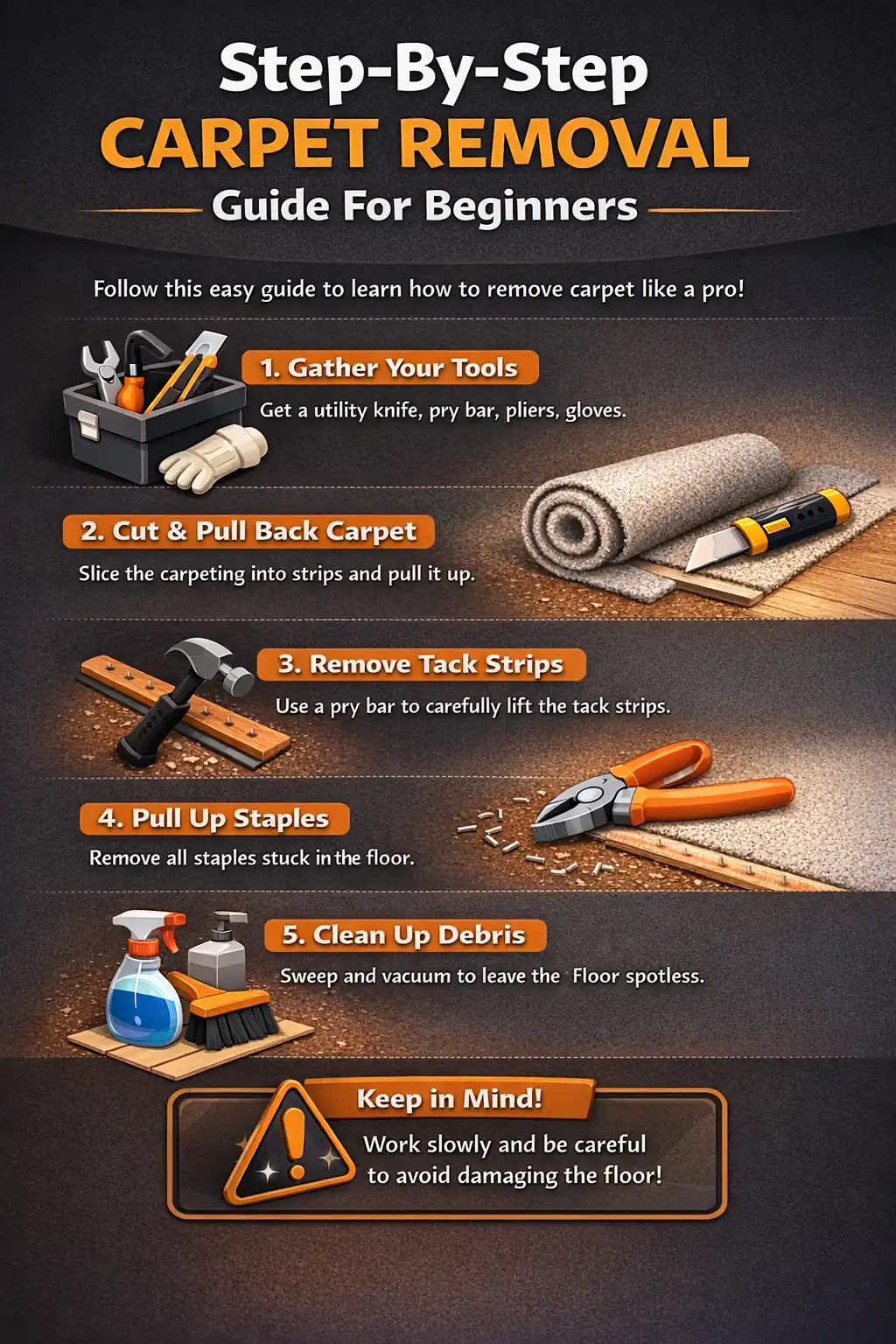
Step-By-Step Carpet Removal Guide For Beginners
Carpet removal is easier when you follow the right order. This guide breaks the process into simple, manageable steps so beginners can work safely, avoid damage, and stay in control from start to finish.
Step 1: Prepare the Room and Inspect the Carpet
Remove all furniture and check how the carpet is secured. Identifying tack strips, staples, or glue early prevents surprises that cause damage later.
Step 2: Cut the Carpet Into Sections
Cut the carpet into narrow strips and roll each section as you go. Smaller sections reduce tension and make removal safer and easier to manage.
Step 3: Remove the Carpet Padding Separately
Padding is often stapled or glued down. Pull it up slowly and remove fasteners as you go to protect the floor underneath.
Step 4: Carefully Pry Up Tack Strips
Use a flat pry bar and work along the wall edge. Apply pressure toward the wall, not the floor, to avoid chips or cracks.
Step 5: Clean Up Staples, Nails, and Adhesive
Finish by removing remaining fasteners and residue. Taking time here prepares the surface for new flooring and prevents future issues.
Why This Step-By-Step Approach Works
Most beginner mistakes happen when steps are skipped or rushed. Following a clear sequence, supported by an estate cleanout checklist–style approach, keeps the process controlled, protects the floor, and makes carpet removal manageable—even for first-timers.
“When beginners run into trouble, it’s rarely because they don’t have the right tools—it’s because they skip steps. From our experience, following the correct order makes carpet removal safer, cleaner, and far less likely to damage the floor underneath, especially when coordinated with a valet trash service to manage removed materials efficiently.”
Essential Resources
We know you want reliable information before tackling a carpet removal project—whether you’re planning DIY or considering professional help. Below are trusted, helpful resources presented in a clear, Jiffy Junk voice you can count on. We use this kind of info every day to help customers make smart decisions about their spaces.
1. Know What Fair Pricing Looks Like
HomeGuide — Carpet Removal Cost Guide
Before you shop quotes, get a realistic breakdown of carpet removal costs by room size, installation type, and location. Seeing typical price ranges helps you avoid surprises.
https://homeguide.com/costs/carpet-removal-cost
2. Learn Real Removal Techniques (DIY or Pro-Aware)
This Old House — How to Remove Carpet
If you’re thinking about doing the job yourself—or just want to understand the process—this step-by-step guide covers preparation, tools, and removal technique basics.
https://www.thisoldhouse.com/flooring/21097110/how-to-remove-carpet
3. Find Carpet Recycling Drop-Offs Near You
Carpet America Recovery Effort (CARE)
We believe responsible disposal matters. CARE’s database helps you locate carpet recycling facilities and learn how removed materials can be reused rather than dumped.
https://carpetrecovery.org/
4. Understand Environmental Impact and Options
U.S. Environmental Protection Agency — Greener Carpet Guide
The EPA explains carpet’s environmental footprint and outlines responsible disposal and recycling options—important context for any removal project.
https://www.epa.gov/greenerproducts/identifying-greener-carpet
5. Customize Cost Estimates for Your ZIP Code
Homewyse — Carpet Removal Cost Calculator
Plug in your ZIP code and project details to see tailored cost estimates based on current rates. This helps you set realistic expectations before comparing quotes.
https://www.homewyse.com/services/cost_to_remove_carpet.html
6. Vet Contractors Before You Hire
HomeGuide — Carpet Removal Companies Guide
Choosing the right service matters. This guide covers what to check for before hiring—like licensing, insurance, transparency, and disposal practices—so you avoid hidden fees and poor service.
https://homeguide.com/carpet-removal-companies
7. Plan What Comes After Carpet Removal
Hunker — How to Replace Carpet With Laminate Flooring
Once the old carpet is gone, what’s next? This guide helps you prepare your subfloor and understand the basics of installing new flooring, so your project flows smoothly.
https://www.hunker.com/13402326/how-to-replace-carpet-with-laminate-flooring
These resources help homeowners approach carpet removal as a smart home improvement project by clarifying costs, techniques, disposal options, and next steps, making it easier to protect floors, manage waste responsibly, and plan what comes after the carpet is removed.
Supporting Statistics
Real-world carpet removal experience lines up closely with the data. These statistics explain why how carpet is removed matters just as much as removing it.
Carpet creates significant landfill waste
4+ billion pounds of carpet discarded each year in the U.S.
Makes up 1%+ of municipal waste by weight
Nearly 2% by volume due to bulk
Large volume becomes obvious once carpet is cut and stacked—especially without a disposal plan.
Source: U.S. EPA (.gov)
https://www.epa.gov/greenerproducts/identifying-greener-carpetCarpet removal can affect indoor air quality
Americans spend ~90% of time indoors
Indoor pollutant levels are often 2–5× higher than outdoors
Older carpet and padding release dust when disturbed, making ventilation and slow removal critical.
Source: U.S. EPA (.gov)
https://www.epa.gov/report-environment/indoor-air-qualityClean removal supports recycling
Tens of thousands of tons of carpet recycled annually
Some programs reach ~40% recycling rates
Carpet is far more likely to be recycled when it’s removed carefully and kept separate from debris.
Source: Carpet America Recovery Effort (.org)
https://carpetrecovery.org/
These numbers reinforce what experience shows: controlled carpet removal protects air quality, reduces waste, and increases recycling opportunities, and the same principles apply to responsible mattress disposal that prioritizes careful handling and proper disposal pathways.
Final Thought & Opinion
Experience shows that carpet removal itself isn’t difficult—rushing is what causes problems. Most damage and mess happen when steps are skipped or removal is treated like demolition.
What matters most:
Slow, controlled removal
Following the correct sequence
Planning disposal before starting
What we see when it’s done right:
Floors stay intact
Dust and air quality are easier to manage
More carpet can be recycled
Our perspective:
Carpet removal sets the foundation for whatever comes next. When it’s handled intentionally, the entire project goes smoother from start to finish.
FAQ on Carpet Removal
Q: What does carpet removal involve?
A:
Lifting carpet, padding, and fasteners
Following the correct removal order
Protecting the floor and limiting dust
Q: How long does carpet removal take?
A:
Most rooms: 1–2 hours
Glued carpet or stairs: Longer due to cleanup
Q: Is DIY carpet removal a good idea?
A:
Works for small, simple rooms
Risk increases with glue, stairs, or hardwood floors
Q: What should be done with old carpet?
A:
Plan disposal before starting
Clean removal improves recycling options
Q: Does carpet removal affect air quality?
A:
Yes, especially with older carpet
Ventilation and slow removal reduce dust