Based on direct experience working with multi-family properties, valet trash is rarely implemented as a “nice-to-have” amenity. It’s most often adopted when communities face recurring dumpster overflow, inconsistent disposal habits, after-hours noise and safety concerns, or increased competition to offer conveniences that support resident retention.
This guide breaks down why apartment complexes choose valet trash service, the operational problems it’s designed to eliminate, and how property managers determine whether the service delivers measurable value beyond basic convenience—helping communities decide if valet trash is the right long-term solution.
Quick Answers
valet trash service
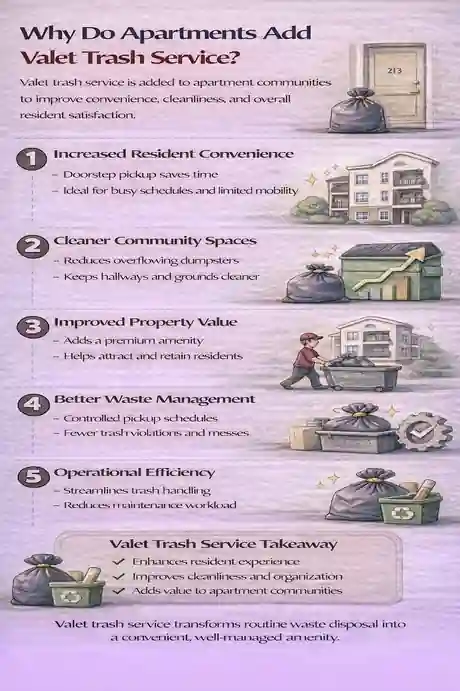
Apartment communities add valet trash service to improve cleanliness, reduce waste-related issues, increase resident satisfaction, and create a more predictable, manageable disposal system across the property.
Key Takeaways
Valet trash is added to address operational inefficiencies, not just convenience
Consistent disposal systems improve resident compliance
Safety and accessibility concerns influence adoption decisions
Property managers benefit from cleaner sites and fewer complaints
The value lies in predictability and system-wide control
Many apartment communities turn to valet trash after facing repeat issues with traditional waste disposal systems.
Common challenges include:
Dumpster overflow caused by irregular use
Trash left outside bins or in common areas
Late-night disposal creating noise and safety risks
Maintenance teams spending time managing waste issues
From real-world experience, valet trash introduces structure where inconsistency previously existed. Scheduled pickup creates predictable behavior patterns, which reduces misuse and overflow, much like following a dumpster rental checklist brings order and consistency to waste handling.
Why Valet Trash Improves Resident Experience
Resident convenience is part of the decision—but not the full picture.
Apartment communities add valet trash because it:
Eliminates long walks to dumpsters
Reduces late-night trips and stair use
Makes disposal easier during bad weather
Encourages consistent resident participation
When disposal is simple and predictable, residents are more likely to follow rules, which benefits the entire community.
Why Valet Trash Helps Property Managers Operate More Efficiently
From a property management perspective, valet trash is often adopted to regain control over waste management.
Key benefits include:
Fewer waste-related complaints
Cleaner dumpster and compactor areas
Reduced illegal dumping
Less strain on maintenance teams
For many communities, the operational improvements outweigh the cost when the program is managed correctly, especially when paired with proactive efforts like a garage cleanout to reduce overflow and maintain shared spaces.
Safety and Accessibility Considerations
Safety is an often-overlooked reason apartments add valet trash service.
Reducing routine trips to centralized dumpsters helps:
Minimize fall risks on stairs and uneven walkways
Lower exposure during late-night disposal
Support residents with mobility limitations
In communities with older residents or multi-story buildings, this factor plays a significant role in adoption decisions.
Is Adding Valet Trash Service Worth It for Apartments?
Valet trash delivers the strongest results when it’s implemented as a managed system rather than a passive amenity.
Communities that succeed typically focus on:
Clear resident guidelines
Consistent pickup schedules
Enforced rules and accountability
Ongoing communication
When these elements are in place, valet trash becomes a long-term operational solution rather than a short-term perk.
“Across apartment communities we’ve worked with, valet trash proves its value when it creates consistency. Clear rules and dependable service turn a common pain point—waste disposal—into a controlled, reliable system that improves cleanliness and day-to-day operations.”
Essential Resources
1. How Valet Trash Supports Apartment Operations
Ultimate Guide to Valet Trash Service for Multifamily Properties
Explains how valet trash fits into daily apartment operations and why many communities adopt it as a standard amenity.
https://www.trashbutler.com/valet-trash-for-multifamily-residences/
2. Understanding the Cost-to-Value Equation
Valet Trash Pricing: What It Costs and How It Works
Details pricing structures and cost factors property managers consider before adding valet trash service.
https://www.trashbutler.com/valet-trash-pricing/
3. Rules That Drive Successful Adoption
Valet Trash Rules: Tenant & Property Manager Guide
Outlines the guidelines that help valet trash programs succeed at scale.
https://www.trashbutler.com/valet-trash-rules/
4. Why Valet Trash Is Becoming Standard
Valet Trash: A Growing Trend in Residential Properties
Explores why more apartment communities are adopting valet trash as a baseline amenity.
https://360clean.com/property-management-cleaning/valet-trash-service-a-rising-trend-in-residential-properties/
5. Legal Considerations for Mandatory Programs
Tenant Rights and Mandatory Valet Trash Fees in Apartments
Covers legal considerations when valet trash is included as a required service.
https://legalclarity.org/tenant-rights-and-mandatory-valet-trash-fees-in-apartments/
6. Operational Advantages for Property Teams
Benefits of Valet Trash for Property Managers
Highlights why property managers adopt valet trash for efficiency and site control.
https://allywaste.com/the-benefits-of-valet-trash-for-property-managers/
7. Accessibility and Compliance Factors
Is Valet Trash ADA-Compliant? What You Need to Know
Explains accessibility considerations that influence adoption decisions.
https://allywaste.com/is-valet-trash-ada-compliant-what-you-need-to-know/
These resources show how valet trash service helps apartment communities manage increased waste volume, rules, and logistics, which becomes especially important during an estate cleanout when large amounts of household debris must be handled consistently, safely, and in compliance with property guidelines.
Supporting Statistics
Waste & Disposal Realities
4.9 pounds of trash per person, per day
High waste volume makes structured disposal systems necessary.
Source: U.S. EPA (.gov)
https://www.epa.gov/facts-and-figures-about-materials-waste-and-recycling/national-overview-facts-and-figures-materialsOnly 32.1% of U.S. waste is recycled or composted
Clear systems improve participation in apartments.
Source: U.S. EPA (.gov)
https://www.epa.gov/sites/default/files/2021-01/documents/2018_ff_fact_sheet_dec_2020_fnl_508.pdf
Safety & Accessibility
211,000+ workers suffer serious fall injuries annually
Reducing trips to dumpsters lowers risk.
Source: CDC / NIOSH (.gov)
https://www.cdc.gov/niosh/falls/about/index.html1 in 4 adults age 65+ fall each year
Doorstep disposal supports safer routines.
Source: CDC (.gov)
https://www.cdc.gov/falls/data-research/index.html
Final Thought & Opinion
Apartment communities add valet trash service when waste management becomes a daily friction point.
From real-world experience, the strongest results come when valet trash is implemented to improve consistency and treated as a practical home improvement that enhances how a community functions day to day. Cleaner properties, safer routines, and fewer operational headaches are the outcomes communities are actually seeking.
When treated as a system, valet trash becomes a quiet but powerful tool that improves day-to-day apartment living for both residents and property managers.
FAQ on Valet Trash Service
Q: Why do apartments add valet trash service?
A:
To reduce overflow and dumping issues
To improve resident compliance
To enhance cleanliness and safety
Q: Is valet trash added mainly for convenience?
A:
Convenience is a benefit
Operational control is the primary driver
Q: Does valet trash help reduce complaints?
A:
Yes
Cleaner sites lead to fewer waste-related issues
Q: Is valet trash worth the cost for apartments?
A:
Yes, when managed correctly
Results depend on consistency and enforcement
Q: What makes valet trash successful long term?
A:
Clear rules
Reliable schedules
Ongoing communication