At Jiffy Junk, we often find acetone stored in low cabinets and under sinks during cleanouts—the exact places kids can reach first. This guide breaks down the safest way to store acetone short-term, reduce fume and spill risk, and how to dispose of acetone properly without guessing.
TL;DR Quick Answers
How to Dispose of Acetone
Treat acetone like household hazardous waste. Keep it sealed, upright, and out of reach, then take it to a local HHW drop-off site or collection event. At Jiffy Junk, we see the biggest risks when acetone is left in low cabinets or tossed in trash “just to get it out of the house.” If it still pours, don’t guess.
Top Takeaways
With kids, acetone disposal is about preventing access.
Keep acetone sealed, upright, contained, and out of reach.
Don’t dump it down the drain. Don’t toss liquid acetone in trash.
Use HHW drop-off or collection events.
Rule: if a child can reach it, it’s not safely stored.
Why Acetone Is Riskier Around Kids
Acetone isn’t just a “strong-smelling remover.” It’s a fast-evaporating, highly flammable solvent that can irritate eyes and lungs and become dangerous if swallowed or spilled. Kids are naturally curious, and acetone containers often look harmless—especially nail polish remover bottles that resemble other bathroom products.
At Jiffy Junk, we see acetone stored in the same places families store everyday items: under sinks, in bathroom drawers, and in laundry cabinets. That’s exactly why disposal should start with safe storage first.
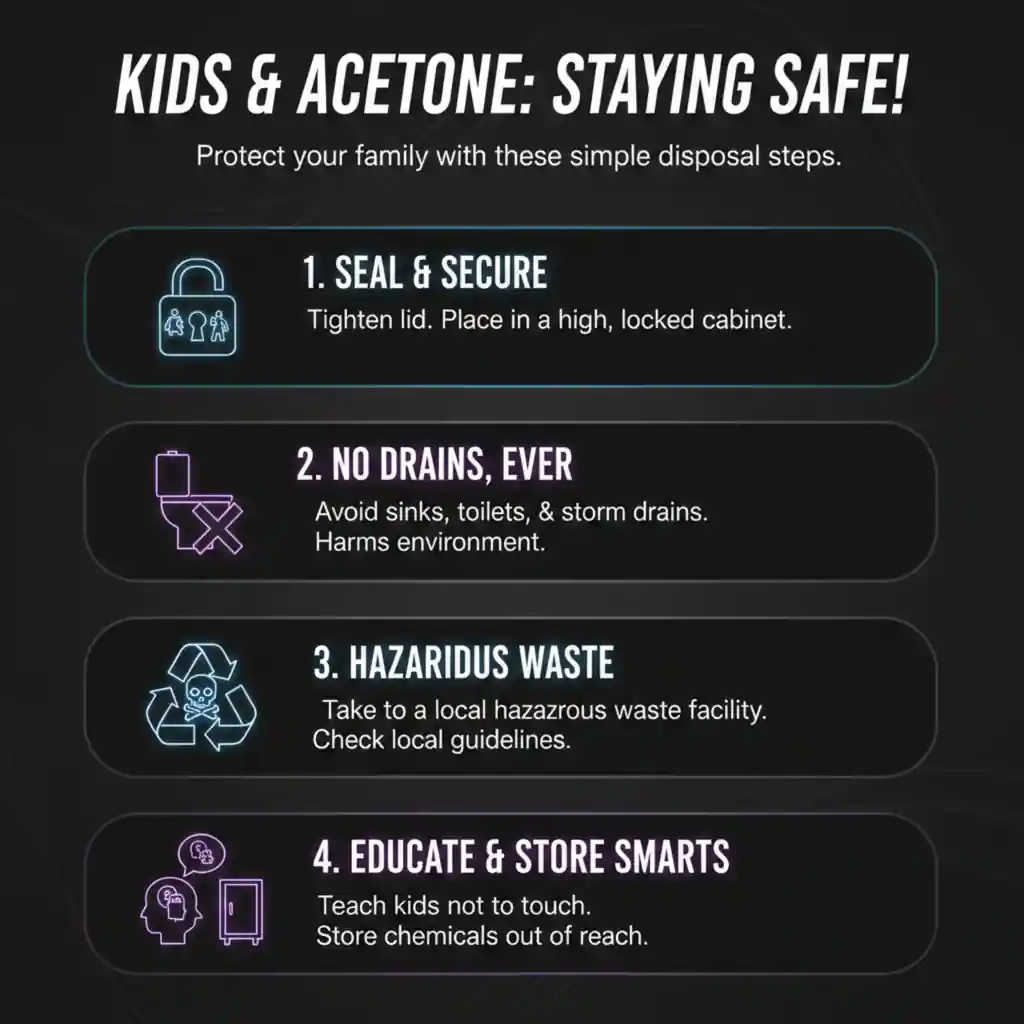
Step-by-Step: How to Dispose of Acetone Safely With Kids at Home
The safest method is to treat acetone like household hazardous waste and keep it out of reach until proper disposal.
Step 1: Move It Out of “Kid Zones” Immediately
Do not store acetone in low cabinets, open bins, or bathroom drawers. Relocate it to a secure area that children cannot access.
Good storage locations include a locked utility cabinet or a high shelf in a well-ventilated area.
Step 2: Keep It in the Original Container and Seal It Tight
Original containers are designed for solvents and include proper labeling. Avoid transferring acetone into cups, travel bottles, or anything a child could mistake for water or juice.
Make sure the lid is fully tightened to reduce fumes and prevent leaks.
Step 3: Use Secondary Containment to Prevent Spills
Place the acetone bottle inside:
a sealed plastic bag, or
a plastic bin with a lid
This extra layer helps prevent accidental spills and keeps odors contained.
Step 4: Store It Away From Heat, Flames, and Electronics
Keep acetone away from:
stoves and ovens
space heaters
candles and incense
power strips and chargers
Kids don’t just open bottles—they knock things over. Reducing ignition risk matters.
Step 5: Dispose Through a Household Hazardous Waste (HHW) Program
For most families, the safest and most rule-friendly disposal option is a local HHW drop-off site or collection event. These programs are designed to accept flammable solvents and prevent them from entering trash or water systems.
If you don’t know where to go, check your city or county waste program site or call local waste services for HHW instructions.
What NOT to Do (Especially With Kids in the Home)
Avoid these common disposal shortcuts:
pouring acetone down the sink or toilet
tossing liquid acetone into household trash
leaving acetone open to evaporate indoors
storing acetone in low cabinets “just for a day”
mixing acetone with other cleaning chemicals
These mistakes increase fumes, fire risk, and exposure—especially for children.
Kid-Safe Cleanout Tip: Check for Hidden Acetone Sources
Many families don’t realize acetone can be in:
nail polish remover bottles
DIY adhesive removers
paint prep products
craft kits
During cleanouts, we often find multiple bottles scattered across bathrooms, laundry rooms, and closets. Consolidate and remove them properly to reduce risk.
When to Call for Help
If you have multiple containers, unknown liquids, or strong fumes, don’t take chances. At Jiffy Junk, we see many families overwhelmed during cleanouts when chemicals are mixed with clutter during home improvement projects.
If you’re not sure what a liquid is or how to dispose of it safely, treat it as hazardous and get help. In homes with kids, “guessing” isn’t worth the risk.
“When kids are in the home, acetone isn’t just a disposal issue—it’s an access issue. At Jiffy Junk, we’ve found acetone bottles under sinks, in low bathroom drawers, and mixed into clutter during family cleanouts, which is exactly where curious hands go first. Our advice is simple: treat acetone like fuel, not a beauty product. Keep it sealed, contained, and out of reach, then get it to proper HHW disposal as soon as you can.”
Essential Resources
EPA Household Hazardous Waste (HHW) Guide: Learn the Safest Legal Disposal Option
This EPA guide explains why acetone is often classified as household hazardous waste and why HHW drop-off programs are the safest disposal route for families.
https://www.epa.gov/hw/household-hazardous-waste-hhw
EPA Waste Regulations Overview: Understand Why Acetone Has Disposal Rules
This resource outlines the federal hazardous waste framework (RCRA) and explains why flammable solvents like acetone can’t be treated like normal trash or drain waste.
https://www.epa.gov/regulatory-information-topic/regulatory-and-guidance-information-topic-waste
Florida DEP Household Hazardous Waste Program: See How HHW Programs Work in Real Life
A state-level guide that explains why HHW programs exist and how residents can safely dispose of hazardous household chemicals, including flammable solvents.
https://floridadep.gov/waste/permitting-compliance-assistance/content/household-hazardous-waste
CloudSDS Acetone Disposal Guide: Get an In-Depth Safety + Compliance Breakdown
This guide dives deeper into acetone hazards, handling risks, and safe disposal pathways—helpful if you want more detailed information than basic tips.
https://cloudsds.com/chemical-hazard-and-safety/how-do-you-dispose-of-acetone-safely-and-legally/
Dispose Cleverly Acetone Disposal Tips: Practical Homeowner Disposal Guidance
A simple, action-focused resource that reinforces key safety steps like avoiding drains, checking local guidelines, and using proper hazardous waste disposal programs.
https://www.disposecleverly.com/dispose-of-acetone-safely/
ChemCafe Acetone Disposal Methods: Learn Safe Methods and What to Avoid
This resource highlights common safe disposal methods and mistakes to avoid, including dumping acetone outdoors or tossing it in regular trash.
https://chemcafe.net/chemistry/how-to-dispose-of-acetone-5826/
Welly Acetone Disposal Guide: Household Tips for Liquid Acetone and Soaked Materials
A practical guide focused on household disposal needs, including handling leftover liquid acetone and acetone-soaked materials safely before disposal.
https://welly.it.com/what-do-you-do-with-leftover-acetone-the-ultimate-guide-to-safe-disposal
These essential resources are especially useful during an estate cleanout, where leftover acetone and other household chemicals are often discovered and must be handled, stored, and disposed of legally and safely rather than thrown away with regular household waste.
Supporting Statistics
Hazardous waste builds up in homes
Average household generates 20+ lbs of household hazardous waste per year
Up to 100 lbs can accumulate over time
Jiffy Junk insight: We find acetone stored “out of sight” during family cleanouts all the time.
Source (EPA): https://archive.epa.gov/region9/waste/archive/web/html/house.html
Acetone fumes have real exposure limits
NIOSH REL: 250 ppm (TWA)
OSHA PEL: 1,000 ppm (TWA)
Jiffy Junk insight: Loose caps in small spaces make fumes noticeable fast.
Source (CDC/NIOSH): https://www.cdc.gov/niosh/idlh/67641.html
Kids are the most common poison exposure group
54.6% of poison exposures involve people 19 or younger (2024)
For kids under 6, 99.2% of exposures are unintentional
Jiffy Junk insight: Low cabinets and clutter make chemicals accessible.
Source (Poison Control): https://www.poison.org/poison-statistics-national
A junk removal service often uncovers hidden acetone and other hazardous chemicals during family cleanouts, making proper sealing, safe storage away from kids, and legal disposal essential to prevent fumes and accidental exposure.
Final Thought & Opinion
With kids at home, acetone disposal is about safety first. The biggest risk isn’t just breaking rules. It’s spills, fumes, and child access.
Safest approach
Treat acetone like a flammable chemical
Keep it sealed and contained
Store it out of reach
Remove it through HHW disposal as soon as possible
Jiffy Junk’s real-world opinion
Most families don’t have too much acetone. They have it in the wrong place. During cleanouts, we often find it under sinks, in bathroom clutter, or in open bins. “Later” is when accidents happen.
FAQ on How to Dispose of Acetone
Q: Can I pour acetone down the sink if I have kids at home?
A: Usually, no. Acetone is flammable and often treated as household hazardous waste. HHW drop-off is safer.
Q: Can I throw acetone in the trash?
A: Not if it’s liquid. Liquid acetone is a fire risk in compacted waste loads. If it still pours, don’t trash it.
Q: What’s the safest way to store acetone around children before disposal?
A: Keep it sealed in the original container, upright, and fully out of reach. Secondary containment helps prevent leaks and odors.
Q: What should I do if my child touches or spills acetone?
A: Ventilate immediately and wash skin with soap and water. If it gets in your eyes or is swallowed, contact Poison Control right away.
Q: What’s the safest way to dispose of acetone at home?
A: Use a Household Hazardous Waste (HHW) drop-off site or collection event. It’s the safest and most compliant option for families.