A soap worth keeping for diabetic skin gets four things right. It leaves out fragrance, stays close to your skin's natural pH, skips harsh sulfates, and puts moisture back instead of stripping it. That standard holds whether you reach for a hand soap, a body wash, or a bar, and it’s what makes the best soap for diabetics a positive daily choice for protecting sensitive skin.
TL;DR Quick Answers
Best soap for diabetics
The best soap for diabetics is a gentle, plant-based cleanser that is fragrance-free, alcohol-free, and pH-balanced to skin's natural 4.5 to 5.5 range, so it cleans without stripping the moisture barrier that diabetic skin already struggles to hold.
Look for:
Fragrance-free (not just "unscented," which can still hide masking fragrance)
Alcohol-free, so it won't strip natural oils or cause micro-cracking
pH-balanced (4.5 to 5.5) to protect the acid mantle
Plant-based, with no sulfates, parabens, or phosphates
Moisturizing ingredients like glycerin or coconut milk powder that condition while they clean
Avoid: alcohol, synthetic fragrance, SLS/SLES, parabens, phosphates, and triclosan.
Top Takeaways
Conventional soap is the wrong default for diabetic skin. Nearly 4 in 5 people with diabetes develop a skin disorder, and most mainstream soaps make it worse.
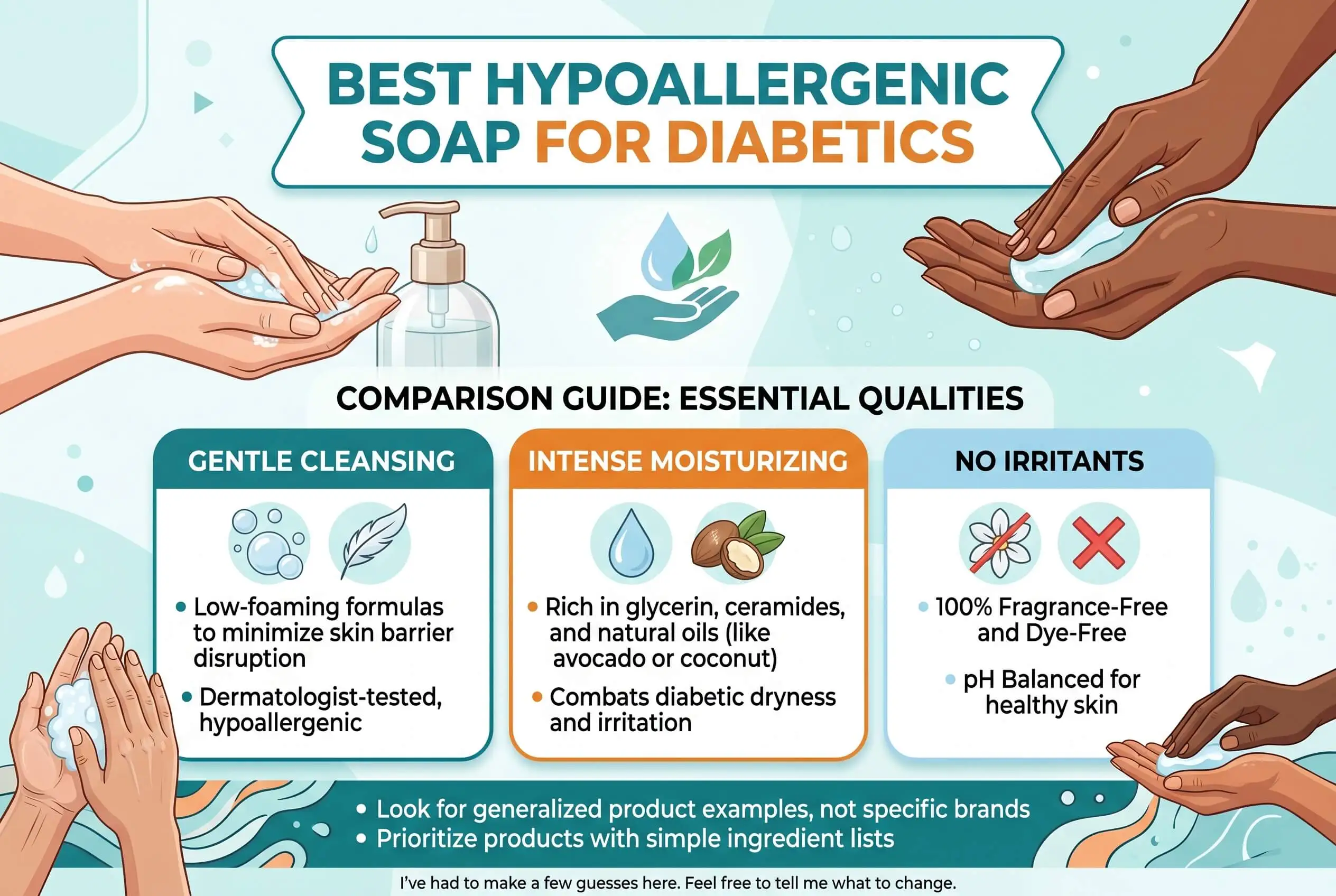
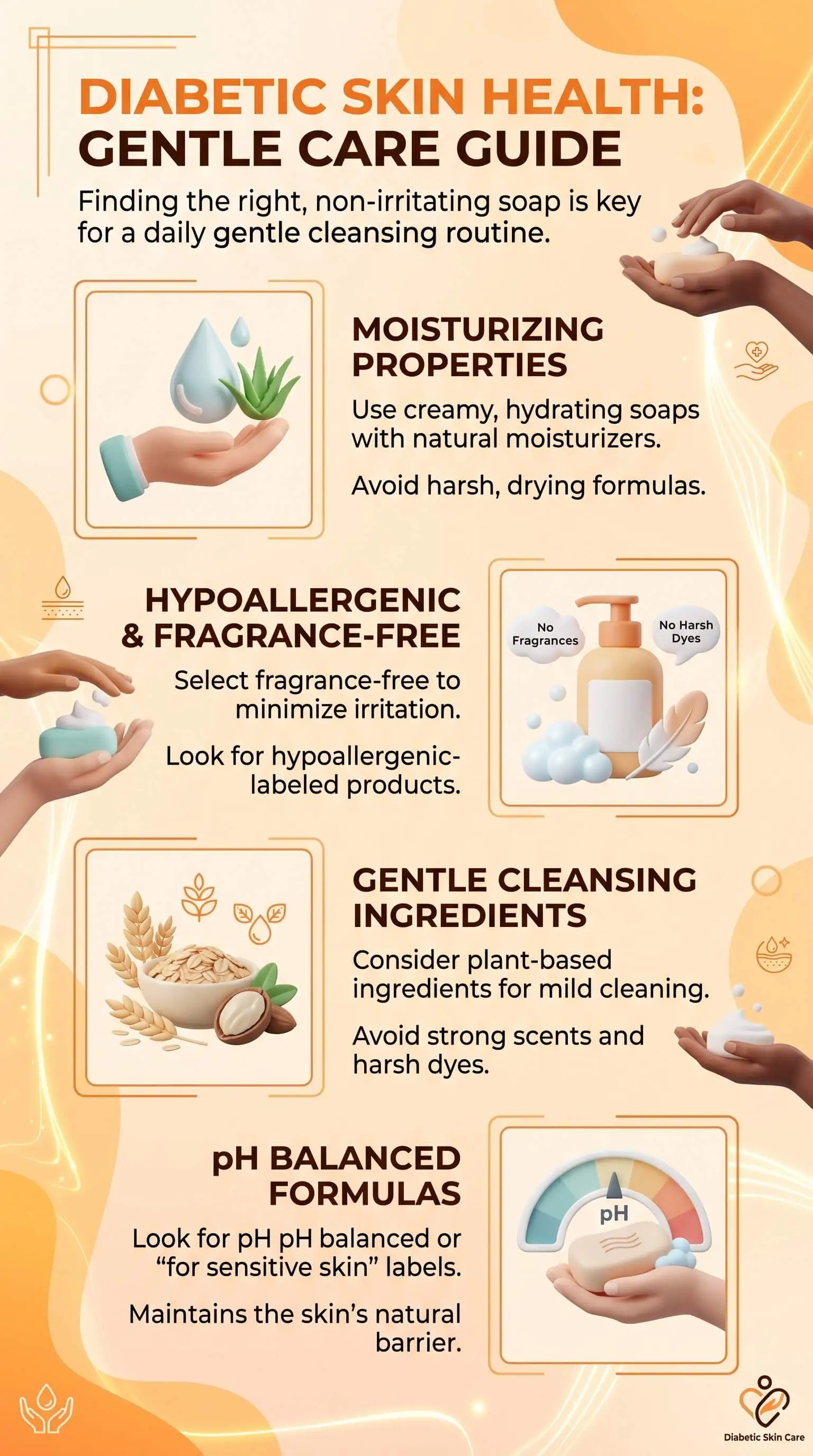
Four features define a good soap for diabetics: fragrance-free, pH-balanced, sulfate-free, and moisturizing.
“Fragrance-free” is the wording to trust. “Unscented” products can still hide masking fragrances.
Start with your hands. They get washed most, so a gentle hand soap protects skin every day.
Technique counts. Lukewarm water, pat dry, moisturize while damp, and check skin and feet daily.
See a professional for slow-healing sores, signs of infection, or any skin change you can't sort out yourself.
Your skin is your largest organ, and diabetes reaches it too. High blood glucose lowers the skin's moisture, slows circulation to the hands and feet, and weakens the acid mantle, the slightly acidic layer that keeps moisture in and bacteria out. Once that barrier is down, the ingredients in most conventional soaps start working against you. Four features tell you whether a soap respects diabetic skin or wears it down.
Fragrance-Free, Not Just “Unscented”
This is the label trick that catches almost everyone. A product can read “unscented” and still carry masking fragrances added to hide the smell of its raw ingredients, and synthetic fragrance is one of the most common triggers of contact dermatitis in sensitive skin. “Fragrance-free” means none went in. Diabetic skin doesn't need the exposure, so that's the wording to trust.
pH-Balanced to Protect Your Acid Mantle
Your skin keeps a thin, slightly acidic layer called the acid mantle that holds moisture in and keeps unwanted bacteria out. Healthy skin runs about 4.5 to 5.5 on the pH scale, while a lot of traditional bar soaps land alkaline and push that protective layer the wrong way with every wash. A pH-balanced cleanser stays inside your skin's own range, so it cleans without undoing the barrier diabetic skin is already working hard to hold.
Sulfate-Free and Gentle on the Skin
Sulfates like SLS and SLES make the big, satisfying lather, and they also strip the natural oils your skin needs, which makes dryness worse. Big foam doesn't equal clean. If you want to see how a milder formula compares with a heavy antibacterial bar, this look at whether SLS-free hand soap kills germs as well as antibacterial soap is worth your time, and anyone buying for a full household can weigh bulk sulfate-free hand soap options without trading away gentleness.
Moisturizing Ingredients That Rebuild the Barrier
Look for ingredients that hold and restore moisture: glycerin, ceramides, shea butter, and plant oils. When skin is very dry, a creamy or lotion-style cleanser usually beats a foaming one, because it conditions while it cleans and leaves moisture behind instead of taking it away.
Ingredients Worth Avoiding
Leave a few things on the shelf: alcohol in any form, synthetic fragrance and dyes, sulfates, parabens, phosphates, and strong antibacterial agents like triclosan. Your skin will tell you when a formula goes too far. If it stings, tightens, or squeaks, it's taking more than it gives.
Choosing the Right Soap: Hands, Body, and Bars
Your hands get washed more than anything else on your body, so a gentle hand soap earns its keep every day. One formula built around every mark above is this doctor-formulated, fragrance-free, pH-balanced hand soap made for diabetic and sensitive skin. NOWATA is 100% plant-based and rinse-free, with no alcohol, synthetic fragrance, parabens, or phosphates, and independent Swiss lab testing (ASTM E1174) confirms it physically removes 99.9% of germs without water. Plant ingredients like Coconut Milk Powder condition while they clean, so hands come away softer rather than stripped. Hold any body wash or bar to the same standard.
How to Wash and Care for Diabetic Skin Daily
Use lukewarm water instead of hot, wash gently, and pat your skin dry rather than rubbing it. Moisturize within a few minutes while skin is still a little damp, and keep lotion away from between your toes. Check your feet every day for cuts or cracks. The right soap and the right technique work together, so it helps to follow the five CDC handwashing steps as part of your routine.
“NOWATA's founders, Dr. Ruslan Maidans (DDS) and Dr. Yalda Shahriari (PhD, Biomedical Engineering), are doctors and parents who built the soap after watching the same trade-off play out in patients and family with sensitive or diabetic skin: hand hygiene that worked but still left skin red, cracked, and chemically burdened. They describe the formula plainly, as clinical reasoning rather than a sales pitch.”
7 Essential Resources
These are the sources worth knowing before you decide what touches your skin every day. Each one comes from a medical organization, a government health agency, or peer-reviewed clinical work. No guesswork, just the science worth knowing before you buy.
American Diabetes Association: Diabetes and Skin Complications. A plain-language look at why diabetes raises skin and infection risk, and how to catch problems early.
American Academy of Dermatology: Dermatologist-Recommended Skin Care for People With Diabetes. Dermatologists' own guidance on choosing a cleanser, setting water temperature, and moisturizing.
MedlinePlus (NIH): Diabetic Foot. Daily-care advice from the U.S. National Library of Medicine, including its note to wash with lukewarm water and mild soap.
NIDDK (NIH): Diabetes and Foot Problems. Government guidance on how nerve damage and reduced circulation make skin slower to heal, and how to spot infection early.
CDC: About Handwashing (Clean Hands). The evidence behind physically removing germs from skin to stop their spread.
Clinical Diabetes (ADA journal): Cutaneous Manifestations of Diabetes Mellitus. A clinical review of how often skin conditions appear in diabetes, and in what forms.
Lambers et al., International Journal of Cosmetic Science: Natural Skin Surface pH. The peer-reviewed basis for why a pH-balanced cleanser matters to your acid mantle.
3 Statistics
Nearly 4 in 5 people with diabetes develop a skin disorder. One clinical review put the figure at 79.2%, with skin infections at 47.5% and dry skin at 26.4% leading the list. At that frequency, the soap you use stops being a cosmetic choice. Clinical Diabetes, American Diabetes Association.
Roughly 1 in 3 people with diabetes develops a related skin condition. Researchers report skin problems in about a third of people with diabetes, and those problems sometimes appear before a diagnosis does. Narrative review, U.S. National Library of Medicine (PMC).
Healthy skin sits at an average surface pH near 4.7. That's on the acidic side, while many traditional soaps land around pH 9 to 10 and can knock the protective acid mantle off balance. Lambers et al., International Journal of Cosmetic Science.
Final Thoughts and Opinion
Soap makers didn't design their formulas for diabetic skin. They designed them for average skin, and diabetic skin has been absorbing the trade-offs ever since: the dryness, the cracking, the irritation from ingredients that were never necessary in the first place. Most “gentle” soaps still clear only one or two of the four marks and quietly miss the rest. A bar can be fragrance-free and still run alkaline. A body wash can sit at the right pH and still be loaded with sulfates.
Diabetic skin needs all four working at once, because the barrier you're protecting doesn't bounce back the way it used to. The fix is simpler than it sounds once you know what to read for. Pick a hypoallergenic soap built for sensitive, diabetic skin, wash with lukewarm water, moisturize while damp, and look your skin over daily. Those small, repeatable choices add up to fewer cracks, less irritation, and lower infection risk over time.
Frequently Asked Questions
What kind of soap is best for diabetics?
A gentle cleanser that is fragrance-free, pH-balanced, sulfate-free, and moisturizing. Those four features protect your skin barrier instead of stripping it.
Is bar soap or liquid soap better for diabetic skin?
Either works if it meets the four marks, though creamy liquid or lotion-style cleansers tend to be gentler on very dry skin. A pH-balanced, moisturizing bar works too. Just steer clear of harsh, highly alkaline ones.
Is antibacterial soap safe for diabetics?
It can be, but a lot of antibacterial formulas dry the skin, and dryness leads to cracking. For everyday use, plain gentle soap and good handwashing remove germs well. Ask your provider about open wounds or active infections.
What ingredients should diabetics avoid in soap?
Alcohol in any form, synthetic fragrance and dyes, sulfates such as SLS and SLES, parabens, phosphates, and strong antibacterial agents like triclosan.
Is “unscented” the same as “fragrance-free”?
No. “Unscented” products can still contain masking fragrances. “Fragrance-free” means none were added, which is the safer pick for reactive diabetic skin.
Can the wrong soap affect diabetic foot health?
Yes. Drying soaps help cause cracked skin on the feet, and those cracks can let infection in. Wash with mild soap and lukewarm water, moisturize everywhere but between the toes, and check your feet daily as part of a simple home improvement routine for healthier living.
CTA
Your skin has put up with enough. Give it a soap that works with it instead of against it, and take a look at this gentle, fragrance-free, pH-balanced hand soap formulated for diabetic and sensitive skin. Your next wash can be an easier one.