TL;DR Quick Answers
environmentally friendly soap for camping
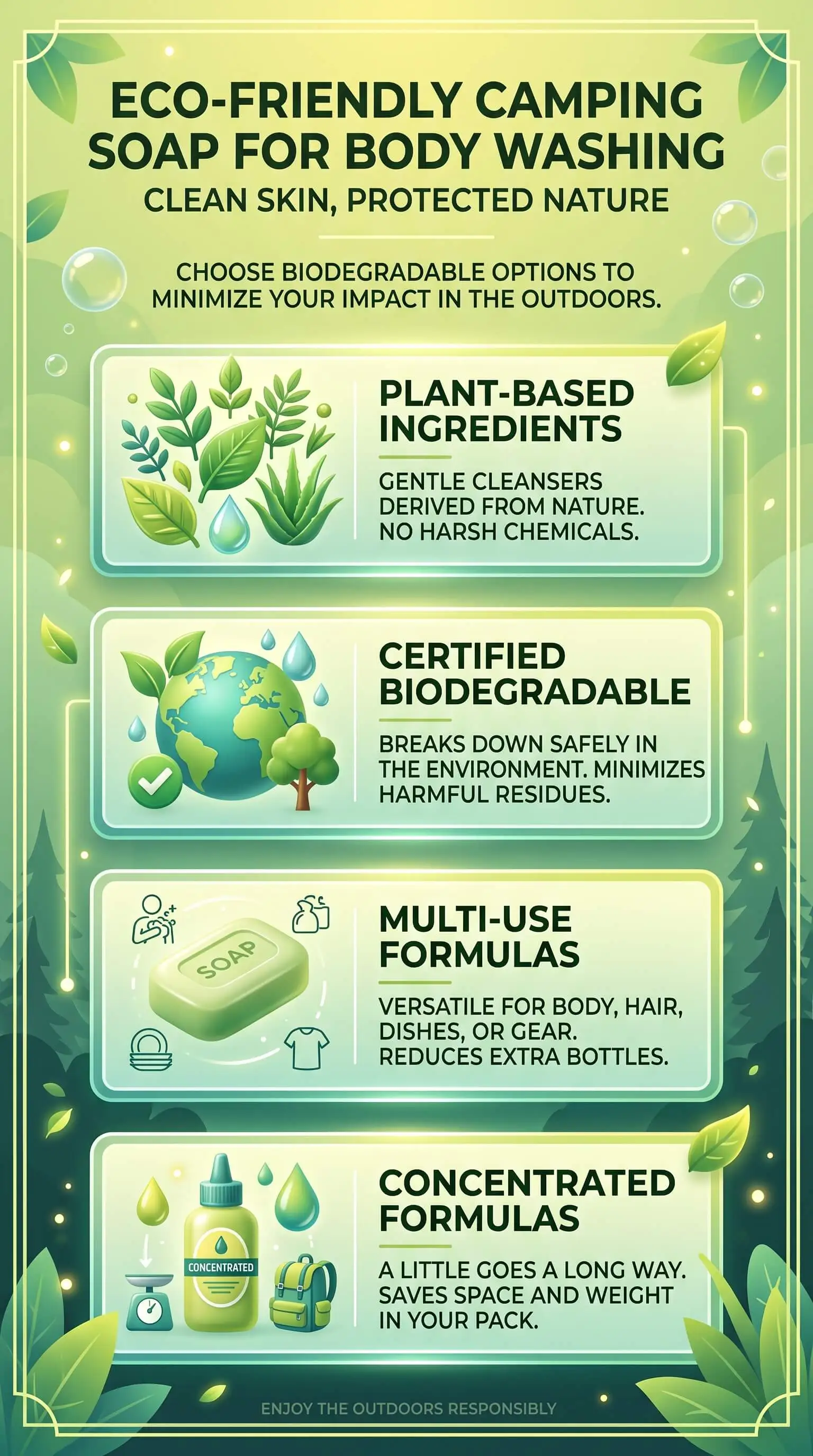
The best environmentally friendly soap for camping is a plant-based, readily biodegradable formula verified against a real standard like OECD 301 or EPA Safer Choice, not one that just says "natural" on the bottle. It should be fragrance-free, sulfate-free, and only used at least 200 feet from any lake, river, or stream, since even biodegradable soap needs soil, not water, to break down.
Look for:
Plant-based ingredients backed by a named biodegradability standard
Fragrance-free, not just "unscented"
Sulfate-free (no SLS or SLES)
Minimal or zero water required to rinse
Used 200+ feet from any water source, every time
Top Takeaways
“Eco-friendly” and “natural” are unregulated marketing terms. Look for a named standard like OECD 301 or an EPA Safer Choice listing before trusting the label.
Even genuinely biodegradable soap needs soil, not water, to break down. Wash and dispose of greywater at least 200 feet from any lake, river, or stream.
“Fragrance-free” is a more reliable claim than “unscented,” which can still contain a masking fragrance.
Format is a tradeoff: concentrated liquid stretches furthest, bar soap skips plastic, rinse-free skips water entirely.
Soap only breaks down through natural biodegradation once it reaches soil and the right microorganisms, not in contact with water.
Packaging counts too. Recyclable or reduced plastic matters as much as what's inside the bottle.
What “Environmentally Friendly” Actually Means for Camp Soap
“Eco-friendly” isn't a regulated term, and neither are “natural” or “green.” A bottle can carry all three words and still be loaded with synthetic fragrance, sulfates, and preservatives that take years to clear a watershed. A soap earns the label for real reasons, not marketing ones: ingredients that are genuinely plant-derived, biodegradation that actually happens once the soap reaches soil, and a testing standard behind the claim instead of just printing on a bottle.
Biodegradable vs. Natural: Why the Wording on the Label Matters
“Natural” tells you almost nothing you can verify. “Biodegradable” at least points to something measurable, if a company can back it up. The FTC's own rule says an unqualified biodegradable claim means the entire product breaks down into natural elements within one year of normal disposal, and most products making that claim were never tested against it. Trust a named standard, like OECD 301 or an EPA Safer Choice listing, over the word on its own.
The 200-Foot Rule: How to Wash Without Harming Water Sources
Even genuinely biodegradable soap needs soil to break down, not water. Land management agencies and Leave No Trace guidance agree on this: carry water at least 200 feet from any lake, river, or stream before you wash, then scatter the greywater across soil so it can filter naturally. Biodegradable soap poured straight into a lake doesn't get a pass just because the label says it eventually breaks down. Some biodegradable formulas can still take months to fully clear a water environment, which is exactly why the distance rule exists.
Ingredients to Look For and Ingredients to Avoid
Favor a short ingredient list built on plant-derived surfactants, with no synthetic fragrance and no sulfates like SLS or SLES. Skip anything marketed as “antibacterial” or “odor-fighting.” Those claims usually come from added chemicals that also slow down the microbes responsible for breaking the soap down in the first place. “Fragrance-free” is the more trustworthy claim than “unscented,” which can still hide a masking fragrance added to cover the smell of raw ingredients.
Bar, Liquid, or Rinse-Free: Choosing the Right Format for Your Trip
A concentrated liquid castile soap stretches the furthest per ounce and handles body, hair, and light laundry in one bottle. A bar soap skips the plastic bottle but adds weight and turns into a mess in a wet pack. A rinse-free, plant-based formula skips water altogether, which matters most when you're hauling every gallon in with you. The right format comes down to how much water you're carrying and how far you are from a place to refill.
How to Wash Your Body at Camp the Leave No Trace Way
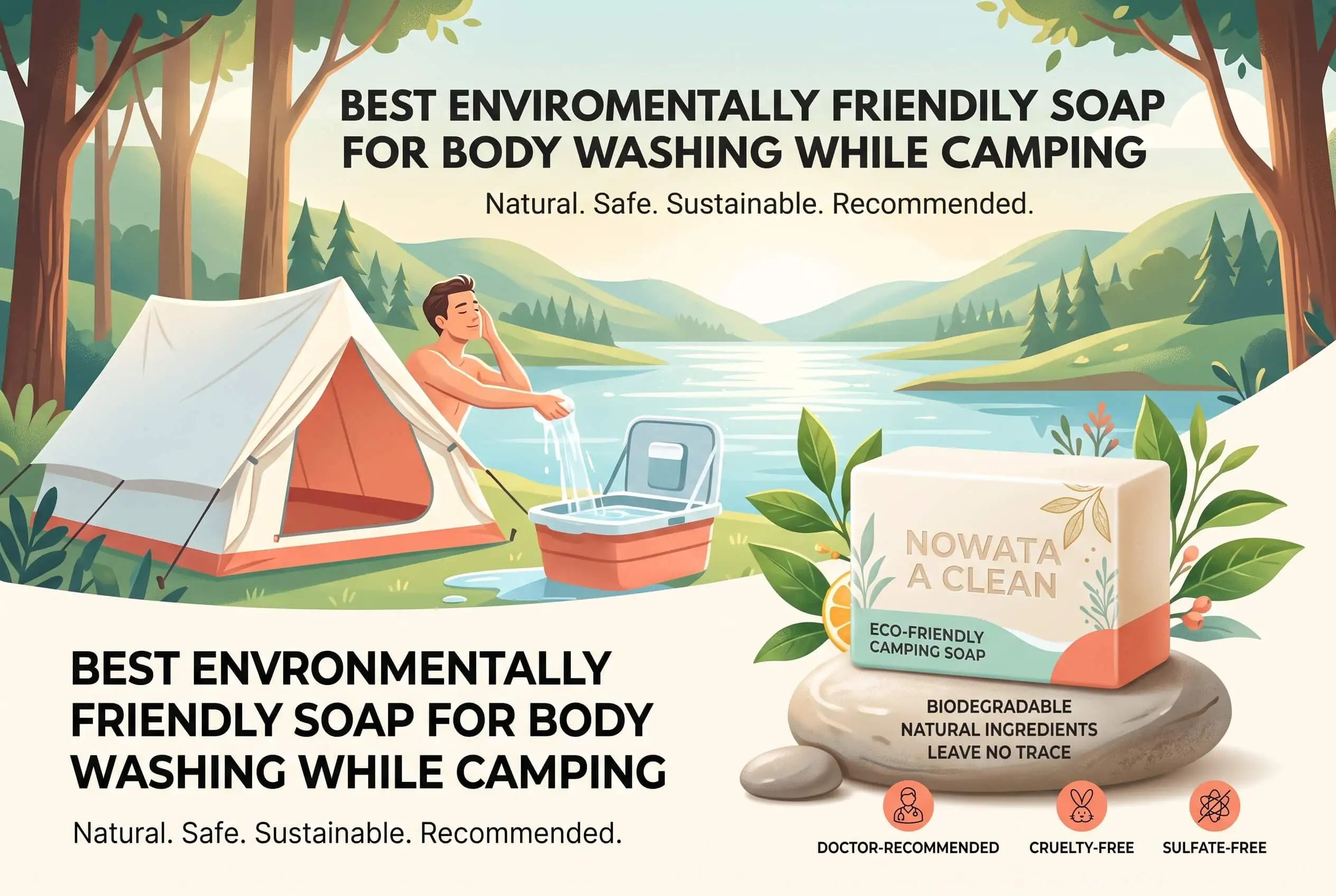
Carry water at least 200 feet from any water source. Use a small amount of biodegradable, fragrance-free, SLS free soap, work up a light lather, and rinse with the water you carried in. Scatter the used water widely across soil instead of pouring it in one spot, and keep soap residue off plants and rocks near camp. Technique matters as much as the formula in the bottle.
“Dr. Ruslan Maidans and Dr. Yalda Shahriari formulate soap and carry it on their own backcountry trips, which puts them in a rare position to speak to this directly. As doctors and backpackers who kept hitting the same wall on the trail, they built a rinse-free, plant-based formula to fix it themselves. Their own words: “Truly eco-friendly soap shouldn't require you to pack two products,” one for camping and a separate one for home. That's the kind of first-hand trail testing worth weighing more heavily than marketing copy on a bottle.”
7 Essential Resources
Federal Trade Commission: Environmental Claims — Summary of the Green Guides. The federal rule behind an unqualified “biodegradable” claim, including the one-year decomposition standard most products never meet.
OECD: Test No. 301, Ready Biodegradability. The international testing protocol behind legitimate biodegradability claims, including the 28-day threshold referenced above.
U.S. EPA: Safer Choice Program. Independent, ingredient-by-ingredient review for human health and environmental safety, including aquatic toxicity.
USDA: BioPreferred Program. Federal certification that verifies and quantifies “plant-based” and biobased content claims.
Leave No Trace Center for Outdoor Ethics: Principle 3, Dispose of Waste Properly. The source of the 200-foot rule for washing and greywater disposal near camp.
Environmental Working Group: Skin Deep Database. Independent ingredient safety lookups for personal-care products, biodegradable or not.
U.S. National Park Service: Leave No Trace Seven Principles. Government-sourced backcountry hygiene and waste-disposal guidance.
3 Statistics
An unqualified “biodegradable” claim legally requires the entire product to decompose into natural elements within one year of customary disposal. FTC, Environmental Claims Summary of the Green Guides.
OECD classifies a substance “readily biodegradable” only when it reaches 60 to 70 percent biodegradation within 28 days of controlled testing. OECD, Test No. 301.
Even biodegradable soaps can take anywhere from six months to several years to fully break down once they reach a water environment, which is why distance from water matters as much as the formula. Leave No Trace, How to Do Your Dishes in the Backcountry.
These statistics show that, much like responsible home improvement, choosing biodegradable soap requires looking beyond the label and considering verified testing, disposal conditions, and distance from natural water sources.
Final Thoughts and Opinion
Soap makers didn't build “eco-friendly” language for campers standing 200 feet from a lake. They built it for a shelf, where “natural” and “biodegradable” sell products whether or not anyone tested the claim. Most soaps marketed for the outdoors clear one or two of the marks that actually matter and quietly skip the rest. A soap can be fragrance-free and still take years to clear a stream. A soap can be plant-based and still end up dumped straight into one, because someone assumed the label was permission.
The fix isn't complicated once you know what to check. Confirm the formula against a named standard, not a marketing word. Keep it fragrance-free and sulfate-free. Treat the 200-foot rule as non-negotiable, because that distance is doing as much environmental work as the soap itself. Get those three right, and body washing while camping stops being a tradeoff between clean and careful.
Frequently Asked Questions
What is the best environmentally friendly soap for camping?
A plant-based, readily biodegradable, fragrance-free formula verified against a real standard like OECD 301 or EPA Safer Choice, used at least 200 feet from any water source.
Is biodegradable soap safe to use directly in a lake or river?
No. Biodegradation depends on soil microorganisms, not water. Use even certified biodegradable soap only on soil, at least 200 feet from any water source.
Is bar soap or liquid soap better for camping?
Both work if the formula is genuinely biodegradable and fragrance-free. Bar soap is lighter and skips the plastic bottle. Concentrated liquid stretches further per ounce. Rinse-free formulas save the most water.
What ingredients should I avoid in a camping soap?
Synthetic fragrance, sulfates like SLS or SLES, parabens, phosphates, and antibacterial additives such as triclosan.
Does “natural” mean the same thing as “biodegradable”?
No. Both terms are unregulated on their own. Look for a specific testing standard or certification instead of trusting either word by itself.
How do I wash my body at camp without harming the environment?
Carry water at least 200 feet from any water source. Use a small amount of biodegradable, fragrance-free soap, and scatter the used water across soil instead of pouring it in one spot.
CTA
Pack a soap that actually earns the “environmentally friendly” label, not just the words printed on the bottle. Test it on your next trip before you need it to work. Check for a named testing standard, keep it 200 feet from water, and let the soil do the rest.