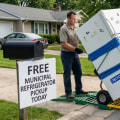
Leaving it on the curb is the most common first move. Sometimes a neighbor hauls it off. More often it sits there until your city tags it as an illegal dump and sends a notice.
Here's the thing: you have more options than that. Some cost nothing. Some cost a little. A few will actually pay you. And the fastest routes are easier to book than most people expect.
This guide covers every realistic way to get rid of a large home appliance — from same-day junk removal to retailer haul-away to free donation pickup — so you can pick the right one and get it done.
TL;DR Quick Answers
What Is Appliance Pick Up?
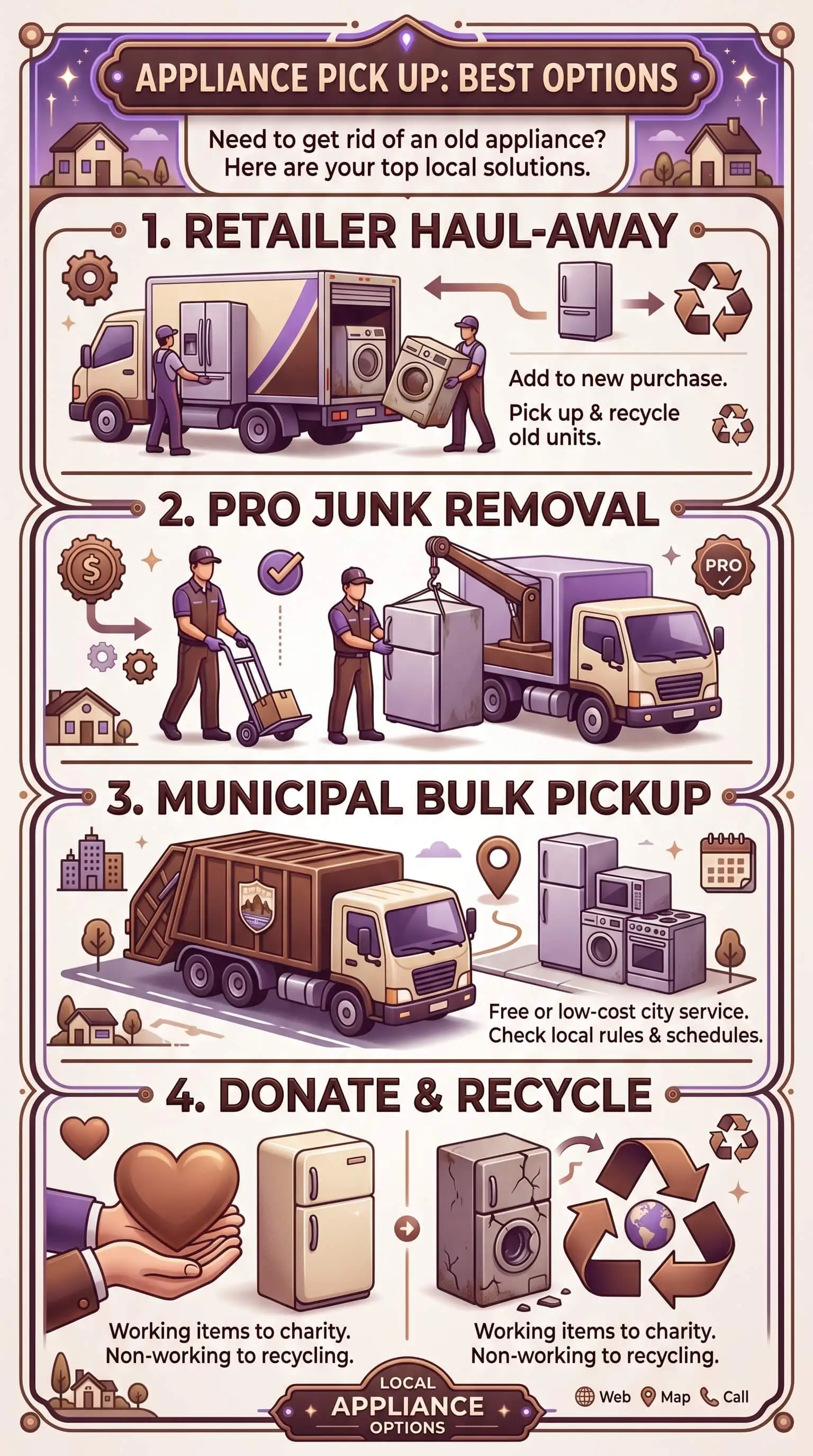
Appliance pick up is a scheduled service where a team comes to your home, removes a large household appliance — refrigerator, washer, dryer, stove, dishwasher, or A/C unit — and hauls it away for proper disposal, recycling, or donation. You don't move it to the curb. The crew handles it from wherever it sits.
Your main options:
Junk removal service — same-day or next-day pickup, door-to-door, no prep beyond disconnection. Typically $75–$130 for one appliance.
Retailer haul-away — Home Depot, Lowe's, Best Buy, and Costco remove the old unit when delivering a new one. Usually $25–$50 added at checkout.
Habitat for Humanity ReStore — free pickup for working appliances under 8–10 years old. Comes with a tax-deductible receipt.
Municipal bulk pickup — free in many cities, but scheduling can run one to two weeks out.
Utility recycling programs — some electric utilities offer free pickup and a cash rebate for working refrigerators and freezers.
What to confirm before booking: licensing, insurance, and EPA-certified refrigerant recovery for any appliance that contains refrigerants — refrigerators, freezers, and window A/C units all qualify.
Top Takeaways
Six options are available for appliance pick up near you: junk removal services, retailer haul-away, Habitat for Humanity ReStore donation pickup, municipal bulk collection, scrap metal dealers, and utility company recycling programs.
Professional junk removal is the fastest and most flexible — same-day and next-day scheduling is common, and licensed services handle EPA refrigerant recovery as standard.
Retailers haul-away through Home Depot, Lowe's, Best Buy, or Costco runs $25–$50 when you're already purchasing a replacement. It's usually the most cost-effective route if a new appliance is on the way.
Working appliances can go to Habitat for Humanity ReStore at no charge. Most locations offer free pickup and provide a tax-deductible receipt.
Refrigerators, freezers, and window A/C units fall under federal safe disposal requirements under Section 608 of the Clean Air Act. Verify that any service you book handles certified refrigerant recovery.
Single-appliance junk removal averages $75–$130 nationally. Adding a second item to the same pickup typically costs $15–$20 more — bundling is almost always worth it.
Municipal bulk pickup is free in many areas, but wait times run one to two weeks in some locations. Check your local sanitation department before counting on it for a tight timeline.
Your Appliance Pick Up Options at a Glance
Here's what's available right now. Each option fits a different situation, so it's worth knowing what you're dealing with before you call anyone.
Junk removal service: The fastest pick up option you'll find. A two-person crew shows up at your door, moves the appliance out from wherever it's sitting, and handles disposal. Same-day and next-day scheduling is standard. You just need it disconnected before they arrive.
Retailer haul-away: Home Depot, Lowe's, Best Buy, and Costco all pull the old unit when they deliver a new one. Usually a small add-on at checkout. The condition: you're buying a replacement, and it needs to be disconnected and accessible when the crew shows up.
Habitat for Humanity ReStore: Working appliances under about 8–10 years old can go this route. Most ReStore locations offer free pickup and hand you a tax receipt. The appliance goes to someone who needs it, not a landfill.
Municipal bulk pickup: Many cities and counties run large-item collections on a set schedule or by appointment. Often free. Check your local sanitation department's site first — some areas have a two-week wait and others pick up the next day.
Scrap metal dealers: Older refrigerators, washers, and dryers carry real scrap value. Some dealers pick up for free or pay a small amount for the metal. Most require you to haul it to them, so call ahead.
Utility company recycling programs: Several electric utilities offer free pickup and cash rebates for working refrigerators and freezers. If your old fridge still powers on, call your utility before paying anyone else.
Which one makes sense for you comes down to three things: whether the appliance still works, how fast you need it gone, and what you're willing to spend. The details on each option are below.
Expert’s Perspective: What Most Homeowners Get Wrong About Appliance Disposal
Most people search for the nearest option and start dialing. That's understandable — the appliance is in the way and you want it out of your house. But the homeowners who end up paying the most, or who run into real problems, are the ones who didn't spend ten minutes figuring out what type of appliance they had and what shape it was in before picking up the phone.
Take a refrigerator. It's not just a large metal box — it carries refrigerants that fall under federal regulation. Section 608 of the Clean Air Act requires certified recovery equipment for disposal. A legitimate pick up service handles that as a matter of course. A cut-rate operation might not. If something goes wrong, it's not their address on the municipal complaint. It's yours.
Think beyond the trash, too. Appliances contain steel, copper, and aluminum with real recovery value. A reputable junk removal service or certified recycling program pulls those materials out and puts them back into use instead of sending them to a landfill. That's how this is supposed to work, and municipalities and regulators are increasingly holding the industry to that standard.
My practical call: if the appliance still runs, try Habitat for Humanity or your utility company first. If it's dead and you need it out this week, book a professional pick up and verify they're licensed and insured before you confirm. If you're replacing it through a major retailer, add haul-away when you check out — it takes thirty seconds and it's usually your cheapest option.
"Paulette Cimmino, home improvement writer and researcher with hands-on experience across appliance replacement, junk removal, and home services. Cimmino has covered home disposal topics for homeimprovement103.com since its founding, drawing on direct experience managing multi-item home cleanouts and interviewing service providers across junk removal, HVAC, and home services."
7 Essential Resources
Bookmark these before you make a single call. Each one is free to use and covers a different part of the process.
1. Jiffy Junk — Professional Appliance Pick Up Service
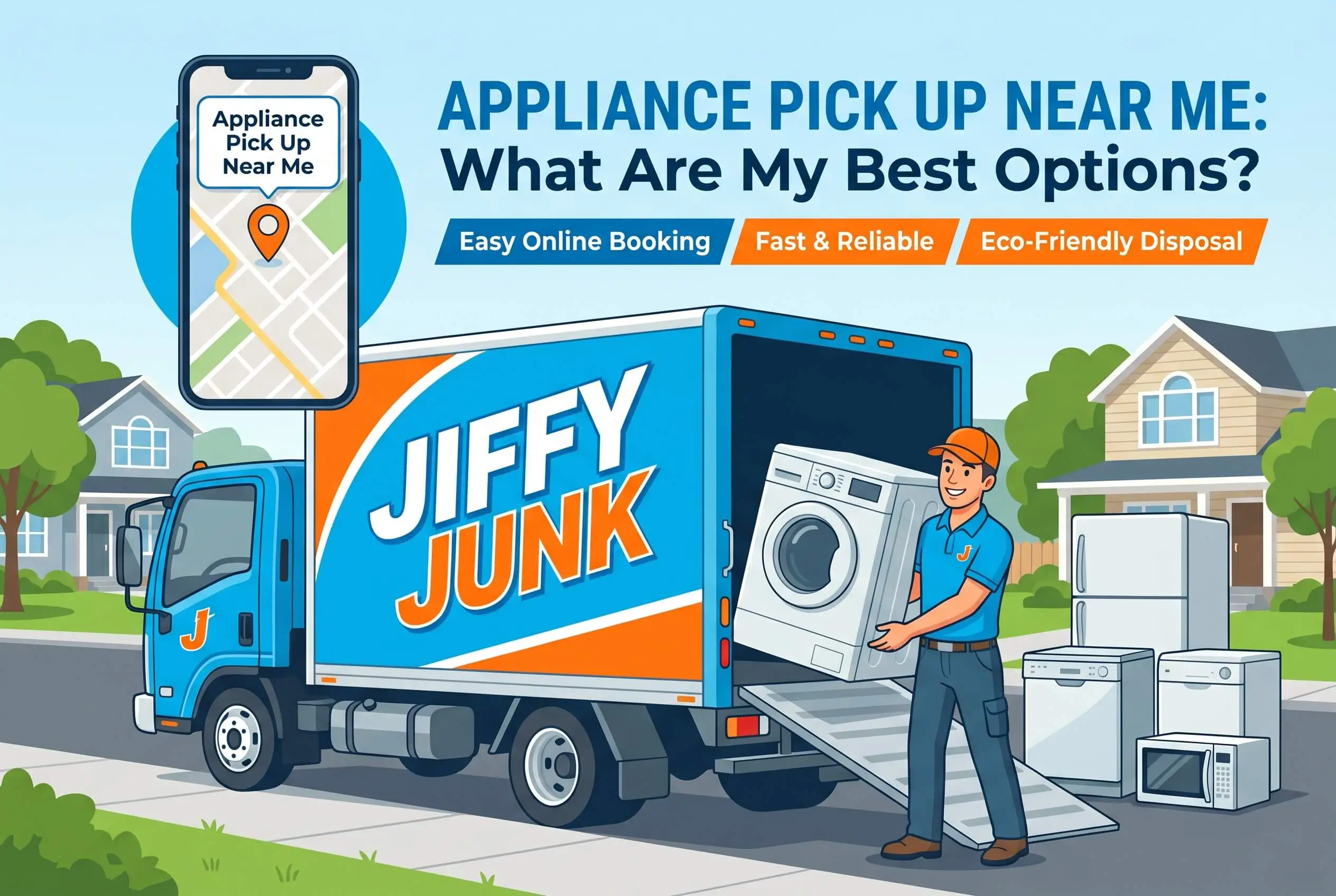
Need a licensed, insured crew to show up and handle the whole job — heavy lifting, responsible disposal, EPA-compliant refrigerant recovery? Jiffy Junk operates same-day and scheduled appliance pick up across major U.S. markets with upfront pricing and no surprises. Visit: Jiffy Junk Appliance Pick Up
2. Habitat for Humanity ReStore — Free Appliance Donation Pickup
Most ReStore locations pick up working appliances and large household items for free, hand you a tax-deductible receipt, and put the unit back into use in your community. Appliances generally need to be in working order and under 8–10 years old. Find your nearest location and schedule at: habitat.org/restores/donate-goods
3. U.S. EPA — Safe Disposal Requirements for Refrigerant-Containing Appliances
Refrigerators, freezers, window A/C units, and dehumidifiers fall under federal safe disposal requirements in 40 CFR Part 82, Subpart F. This is the official source for what those rules require and why they matter when you're choosing a pick up service. Read the guidance at: EPA Stationary Refrigeration Safe Disposal Requirements
4. Angi — Junk Removal Cost Guide
Before you take a quote from any junk removal company, know the going rate. Angi's regularly updated cost guide breaks down average appliance removal pricing by item type and region. Use it to tell a fair quote from an inflated one: Angi Junk Removal Cost Guide
5. Dropcurb — Appliance Haul-Away Option Comparison
Want a direct comparison of what Home Depot, Best Buy, Costco, and independent services each charge and require for appliance removal? Dropcurb's 2026 breakdown is the most current side-by-side available. Read it before you commit to a provider: Dropcurb: Does Home Depot Remove Old Appliances?
6. U.S. EPA — Durable Goods Product-Specific Data
The EPA tracks appliance generation, recycling rates, and landfill volume by category going back to 1960. It's concrete data on the scale of the problem — worth a look if you want to understand why proper disposal channels exist in the first place: EPA Durable Goods: Product-Specific Data
7. Green Citizen — Appliance Recycling Program Finder
Green Citizen's appliance recycling guide covers certified recycling centers, utility take-back programs, and manufacturer take-back options by region. Especially useful for refrigerators and A/C units that contain controlled substances and can't just go to the curb: Green Citizen: Appliance Recycling Guide
3 Statistics
Numbers help. These three explain why picking the right option matters — not just for your wallet, but for what actually happens to the appliance after it leaves your home.
18+ million large appliances are thrown out in the United States every year. That count covers refrigerators, washing machines, dryers, ranges, dishwashers, and air conditioners. It doesn't include the estimated 23 million small appliances discarded in the same period. The volume is exactly why licensed pick up and disposal services exist — the waste stream is too large and too regulated for the curb to handle.
Source: E-Waste Statistics, Market.us Scoop
$75–$130 That's the national average cost to remove and haul away a single large household appliance through a professional junk removal service, per Yelp's cost data. Add a second appliance to the same job and the total usually moves to $90–$140. Bundling two items almost always costs less than two separate calls.
Source: Yelp Cost Guide: Appliance Removal
Only 20% of e-waste from large household appliances gets properly recycled worldwide. In the U.S., the EPA estimates more than 13 million refrigerators and freezers are discarded each year — over 5 million tons of material. Choosing a certified pick up service over curbside dumping puts you on the right side of that number.
Source: E-Waste Statistics, Market.us Scoop; EPA Responsible Appliance Disposal Program
Final Thoughts and Opinion
A working five-year-old refrigerator and a dead 20-year-old chest freezer stuck in the basement are two completely different jobs. The options available, the cost, and the time involved change based on exactly that kind of detail.
Retailer haul-away is the most overlooked option on this list. If you're already buying a replacement, adding haul-away at checkout costs $25 or less and takes under a minute. Most homeowners skip it, then pay $100 or more to a junk removal service a few weeks later. That's money left on the table.
Donation pickup through Habitat for Humanity ReStore is similarly overlooked for working appliances. A lot of homeowners assume their unit won't qualify, or that scheduling a pickup is complicated. Most ReStore locations make it genuinely simple, and the tax deduction is real money — not just a feel-good gesture.
For anything broken, hard to reach, or needed gone today, professional junk removal is the right call. The gap between a good service and a bad one comes down to two things: licensing and insurance, and proper EPA refrigerant recovery on units that require it. Ask both questions before you book.
Pick the option that fits your appliance, your timeline, and your budget. You've got more of them than most people know about.
Frequently Asked Questions
Who picks up old appliances near me?
Your main options are professional junk removal companies (same-day and next-day in most metro areas), major retailers like Home Depot and Lowe's (when delivering a new appliance), Habitat for Humanity ReStore (for working units), and your local municipal sanitation department (for scheduled bulk collection). For speed and flexibility, a licensed junk removal service covers the most ground.
Is appliance pick up free?
Some routes are free. Municipal bulk pickup costs nothing in most areas. Habitat for Humanity ReStore picks up working appliances at no charge. Utility recycling programs are often free and may add a cash rebate for working refrigerators. For a broken appliance or a tight timeline, professional junk removal runs $75–$130 per item. Retailer haul-away adds $25–$50 to a new appliance purchase.
Does Home Depot pick up old appliances?
Yes, with conditions. Home Depot offers haul-away as a paid add-on ($25–$50 per appliance) when you're buying and having a new appliance delivered. The old unit needs to be disconnected, emptied, and accessible when the crew arrives — their team won't do the disconnection. Home Depot doesn't offer standalone appliance removal without a new purchase attached.
How do I get rid of a refrigerator near me?
Four options work well for refrigerators. Book a junk removal service for door-to-door pickup with EPA-compliant refrigerant handling. Add haul-away when ordering a replacement through Home Depot, Lowe's, or Costco. Donate it to Habitat for Humanity ReStore if it still runs — most locations pick up for free. Or check with your electric utility; several run refrigerator recycling programs that include free pickup and a rebate.
What appliances do junk removal companies take?
Most licensed companies take all major household appliances: refrigerators, freezers, washers, dryers, dishwashers, ranges, ovens, window A/C units, microwaves, water heaters, and dehumidifiers. Appliances containing refrigerants require EPA-certified recovery, which reputable services handle as part of the job. Confirm what's covered and ask about credentials when you book.
How much does appliance removal cost?
One appliance through a professional junk removal service typically runs $75–$130, based on national average data. Adding a second appliance to the same job usually adds $15–$20. Region, appliance weight, and access all affect the final number — a basement pickup or a unit stuck behind a finished wall will cost more than a first-floor fridge sitting in the open.
Ready to Get Your Appliance Picked Up Today?
Dead refrigerator. A washing machine that finally gave up. A full-house cleanout with appliances in every room. Whatever you're dealing with, there's an appliance removal service option in this guide that fits.
Need it handled fast? Book it now: