TL;DR Quick Answers
20x20x1 air filter
A 20x20x1 air filter is the standard 1-inch pleated filter in the return grille of most homes built since the mid-1990s. Actual size runs about 19.5 x 19.5 x 0.75 inches. MERV 11 hits the sweet spot for allergen capture, and most households should change it every 30 to 90 days.
Actual size: 19.5 x 19.5 x 0.75 inches (nominal 20 x 20 x 1)
Where we find it: the 1-inch return grille slot in most homes built since the mid-1990s, usually a hallway ceiling or a wall return near the air handler
MERV rating we recommend: MERV 11 for most allergy households. MERV 13 only if your air handler is rated for it.
How often we change it: every 30 to 45 days for allergy households, 60 to 90 days otherwise
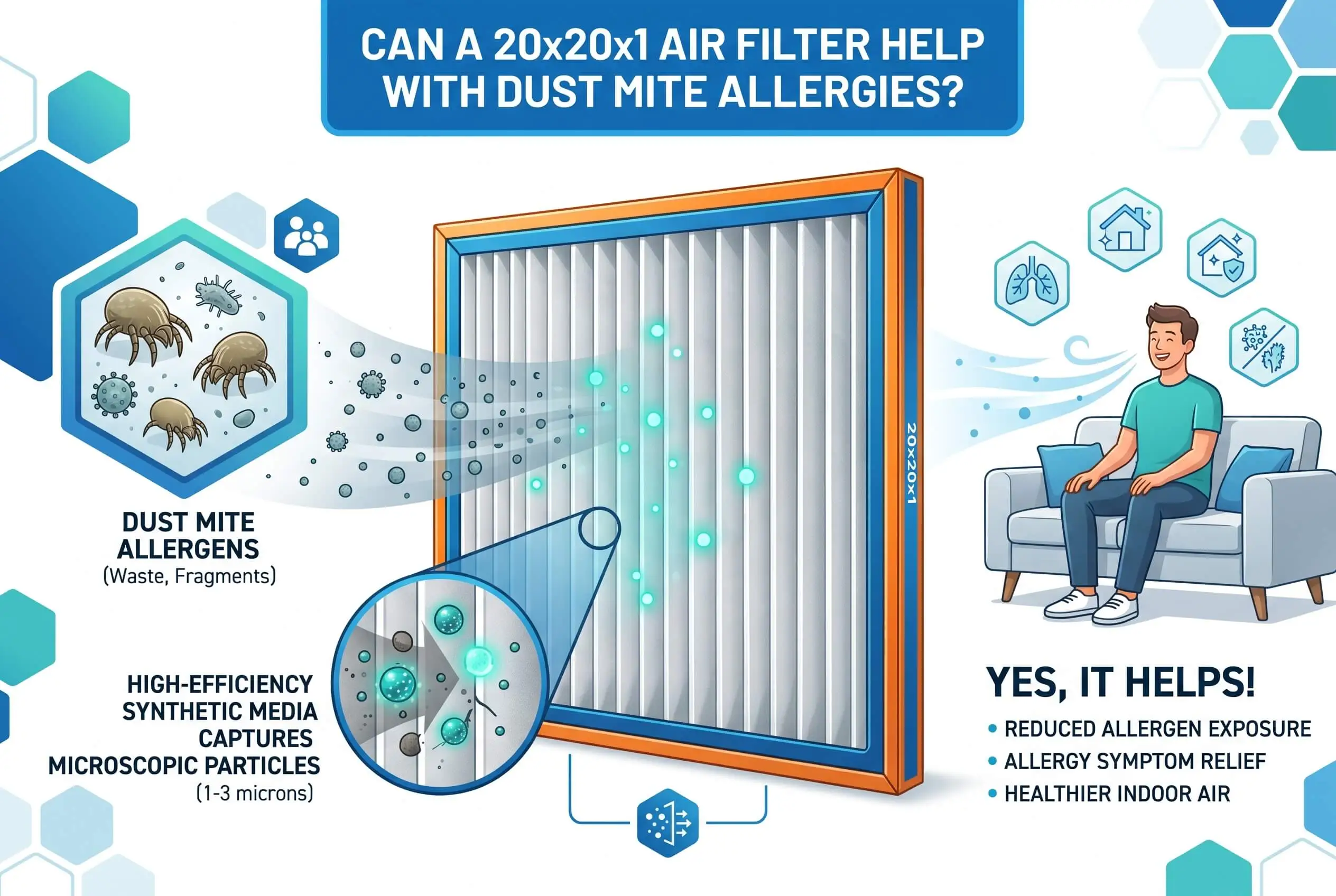
What it catches: dust, pollen, pet dander, mold spores, and airborne dust mite allergen fragments
Top Takeaways
A 20x20x1 filter catches what's airborne, which doesn't include live mites. The mites stay tucked in mattresses and upholstery, beyond what filtration can reach.
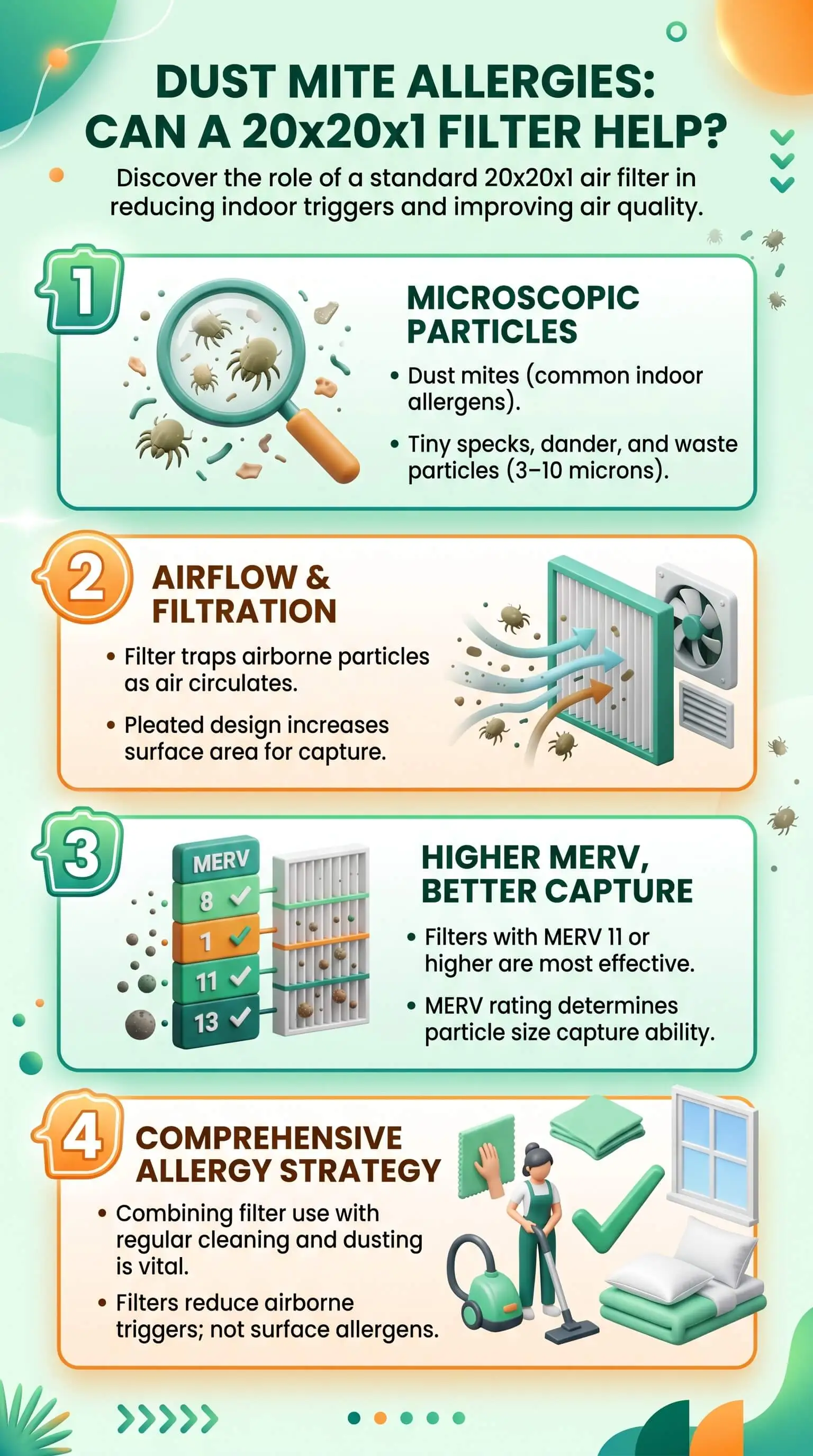
MERV 11 is the practical sweet spot for a 1-inch slot. It grabs the 1-to-3 micron particles where dust mite allergens live without overworking most blowers.
Plan on a 30-to-45-day change cadence during heavy AC use. The 90-day interval printed on most boxes assumes a non-allergy household.
Filtration is one of three pieces. Indoor humidity below 50 percent and weekly hot-water bedding washes carry the other two.
What's actually airborne, and what isn't
Live mites aren't really the issue from an airborne perspective. They're too heavy to stay aloft for long, and they live tucked into mattresses, pillows, and upholstered furniture where the air filter never reaches them. What we end up filtering is the lighter material: dried fecal pellets, broken-off body fragments, and the protein dust that lifts every time someone sits down or shakes out the sheets. Your immune system reacts to that protein, and that's what a filter has a shot at catching.
How a 20x20x1 air filter fits in
Almost every home built since the mid-1990s has at least one 20x20x1 return grille, typically in a hallway ceiling or a tall wall return near the air handler. Each time the blower fires up, it pulls room air through that pleated media, and the filter catches particles by direct interception, inertial impaction, and electrostatic attraction. That's the standard particulate filtration mechanism behind every pleated HVAC filter on the market. A MERV 11 filter grabs roughly 65 to 85 percent of particles in the 1-to-3 micron range, which is where most airborne dust mite allergen fragments live.
In our experience, MERV 11 is the practical sweet spot for a 1-inch slot. MERV 8 filter catches dust and lint just fine, but it lets most allergen-sized particles slip through. MERV 13 captures more of the fine stuff, though on older blowers it raises static pressure enough to reduce airflow and stress the equipment over time. For systems rated MERV 13, use MERV 13. The air handler nameplate or the installation manual will tell you. If neither's clear, MERV 11 paired with a tighter change cadence is the safer move for most homes.
The two things that matter as much as filtration
Indoor humidity above about 50 percent gives dust mite populations the moisture they need to expand fast. EPA puts the target range at 30 to 50 percent indoor relative humidity, and in our experience that single variable explains more about a home's dust mite load than any other factor. Bedding handles the rest. Because mites live in mattresses, pillows, and upholstered furniture rather than in the air, weekly washes of sheets and pillowcases in water above 130°F reduce the source population in ways a filter never will. Add the best air filters to that routine, and they help capture airborne dust, dander, and allergen particles between cleanings, making humidity and bedding management even more effective for allergy relief.
“The first thing we ask is when the symptoms hit,” says a NATE-certified HVAC technician on our team. “If the sneezing peaks an hour or two after the AC kicks on, the airborne load is the issue, and a fresh MERV 11 in the return makes a real difference inside a week. When the worst of it is in bed at night and eases through the day, the filter alone won't get the family there. That's when we start talking about mattress encasements, the dehumidifier setting, and other practical home improvement steps that make the whole indoor environment healthier. And honestly, in our humid summers, the dehumidifier is doing more work than people give it credit for.”
7 Essential Resources
The sources we keep handy when families want to read further on dust mite allergies and indoor air quality.
Asthma and Allergy Foundation of America, Allergy Facts and Figures: aafa.org/allergies/allergy-facts/
NIH / NCBI StatPearls, Dust Mite Allergy clinical overview: ncbi.nlm.nih.gov/books/NBK560718/
EPA, Biological Pollutants' Impact on Indoor Air Quality: epa.gov/indoor-air-quality-iaq/biological-pollutants-impact-indoor-air-quality
EPA, The Inside Story: A Guide to Indoor Air Quality: epa.gov/indoor-air-quality-iaq/inside-story-guide-indoor-air-quality
EPA, Indoor Air Pollution: An Introduction for Health Professionals: epa.gov/indoor-air-quality-iaq/indoor-air-pollution-introduction-health-professionals
American Lung Association, Dust Mites: lung.org/clean-air/indoor-air/indoor-air-pollutants/dust-mites
Wikipedia, Air Filter (background on filtration mechanics and HEPA standards): en.wikipedia.org/wiki/Air_filter
3 Supporting Statistics
20 million people in the United States live with a dust mite allergy. Source: Asthma and Allergy Foundation of America.
Approximately 84 percent of U.S. households have detectable dust mite presence. Source: NIH / NCBI StatPearls, Dust Mite Allergy.
Roughly four out of five U.S. homes have dust mite allergens in at least one bed. Source: American Lung Association, Dust Mites.
Final Thoughts and Opinion
A 20x20x1 filter swap is one of the most cost-effective moves an allergy household can make, and across the homes we visit, it's one of the most underused. Most families we work with stop short of doing it consistently. A fresh MERV 11 in the right slot, changed every 30 to 45 days during heavy AC season, paired with a humidity check and a weekly bedding wash. That's the whole routine. A standard 20x20x1 air filter at MERV 11 is the right starting point for most households. The rest is sticking with it. Honest take after years of doing this work: people underestimate how much the filter matters in the day-to-day, and they overestimate how much the filter can do all on its own. Both sides of that gap are worth closing.
Frequently Asked Questions
Will a 20x20x1 air filter kill dust mites?
No. The filter catches whatever's already airborne, like dried droppings and broken-off body fragments, but it never touches the mattresses, pillows, and upholstered chairs where the live mites actually colonize. Killing mites is a humidity-and-bedding job, not a filter job.
What MERV rating is best for dust mite allergies in a 20x20x1 size?
MERV 11 for most homes. It catches the 1-to-3 micron particles where dust mite allergen fragments live, and it does so without overworking the average residential blower. MERV 13 captures more, but only steps up if your air handler is rated for it. MERV 8 is usually too loose for an allergy household.
How often should I change a 20x20x1 filter if someone in the house has dust mite allergies?
Every 30 to 45 days during heavy AC use. The 90-day interval printed on most filter boxes assumes a non-allergy household with moderate system runtime. Allergy homes in humid climates often need the tighter cadence year-round, especially when the AC runs nearly every day from May through October.
Is a 20x20x1 filter enough on its own to relieve dust mite symptoms?
Usually not. A good filter handles the airborne load, which is real and worth managing. Indoor humidity below 50 percent and weekly hot-water bedding washes handle the source population in the rooms where mites actually live. The families who see lasting relief tend to do all three.
Can I use a HEPA filter in a 20x20x1 HVAC slot?
Not in most residential setups. True HEPA media is too restrictive for the typical residential blower, and dropping one into a 20x20x1 slot usually starves the system of airflow. A portable HEPA unit running in the bedroom at night is a better way to add HEPA-level filtration where it actually helps most for an allergy household.
Get Ahead of Dust Mite Allergies This Season
A fresh MERV 11 20x20x1 filter slides into the return grille in under ten minutes and starts working on the airborne load right away. Pair it with a humidity check and a weekly bedding wash, and most allergy households we work with notice the difference inside two weeks.