I've spent years writing about the products that fill our homes, and the hand-hygiene complaint I hear most is always a version of the same thing. The product meant to protect your hands is the one wrecking them. So here's the good news. A hand sanitizer alternative can still help you keep your hands clean without the fragrance and alcohol that cause the damage, and the gentlest option on the shelf isn't a sanitizer at all.
TL;DR Quick Answers
Hand sanitizer alternative
The best hand sanitizer alternative is one that removes germs instead of killing them in place. A rinse-free, plant-based soap lifts dirt, oil, and germs off your skin with no water, no alcohol, and no added fragrance, so nothing irritating gets left behind.
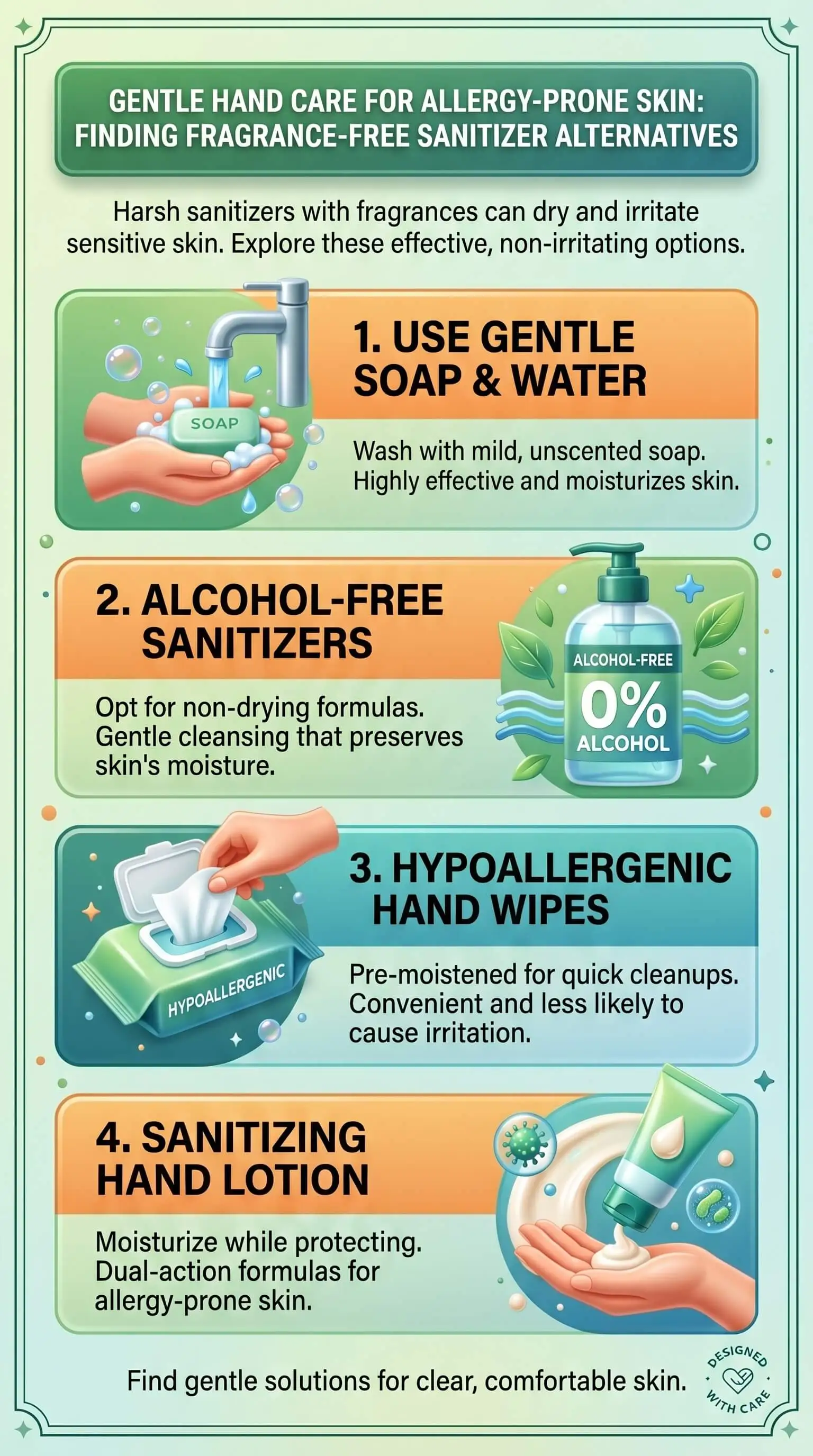
Top alternatives, gentlest first:
Rinse-free plant-based soap. Removes germs without water, alcohol, or added fragrance. Best for sensitive, allergy-prone skin.
Fragrance-free alcohol gel. A fast germ kills for backup, though the alcohol can sting reactive skin.
Fragrance-free hand wipes. Handy for visible mess. Check the label for preservatives.
Unscented soap and water. The lowest-irritation choice any time a sink is nearby.
Top Takeaways
A few ingredients cause most reactions. Added fragrance, high alcohol, and certain preservatives. A true fragrance-free alternative leaves out all of them.
“Unscented” is not “fragrance-free.” Unscented products can still carry a masking scent, so read the ingredient list, not the front of the bottle.
For reactive skin, removing germs beats killing them. Less residue left on your hands means less for your skin to react to.
Rinse-free, plant-based soap is the gentlest everyday pick. No alcohol, no fragrance, and no water needed.
At home, plain fragrance-free soap and water still wins. It's the lowest-irritation option any time a sink is in reach.
What Makes a Hand Sanitizer Alternative Right for Allergy-Prone Skin
Most reactions trace back to the same short list. Fragrance leads it. It's one of the most common causes of allergic skin reactions, and “unscented” won't save you, because plenty of unscented products add a masking scent to cover a chemical smell. Alcohol comes next, usually 60 to 70 percent ethyl or isopropyl, drying and weakening the skin barrier a little more with every use. Then there are the preservatives. Certain parabens can set off contact dermatitis in people who already get it.
A real fragrance-free hand sanitizer alternative skips all of that: no added scent, nothing that strips your skin raw, and a short ingredient list you can actually read. One distinction does most of the work, though. Killing germs and removing them aren't the same job. It's the difference between killing the weeds in a garden bed and pulling them out. One leaves them lying there. The other clears the bed. A disinfectant wipes out germs where they sit but leaves the dead residue behind, along with whatever dirt and allergens were already on your hands. Lift those germs off your skin instead, and the whole mess goes with them. For reactive hands, less left behind means less to react to.
Here are the options worth knowing, roughly in the order I'd reach for them.
Rinse-free plant-based soap
This is the one I point people to first. A rinse-free, plant-based soap cleans without alcohol, without added fragrance, and without parabens or harsh preservatives. Instead of killing germs and stranding them on your skin, it grabs the dirt, oil, and germs so you can lift them away, no water needed. If you want the full picture, including the lab testing and the ingredient reasoning, this guide to a rinse-free, plant-based hand sanitizer alternative lays it out. It's gentle enough for daily use and small enough to live in a bag or a glovebox.
Fragrance-free alcohol gels
If you still want a traditional gel, look for one labeled fragrance-free with a humectant like glycerin to take the edge off the drying. These kill germs fast when there's no sink in sight. But the alcohol can sting cracked or broken skin, so I'd treat them as a backup rather than your everyday pick.
Fragrance-free hand wipes
Wipes handle visible mess and travel well. The catch is the preservatives many of them carry, which can bother sensitive skin, so read the inactive ingredients before you buy a case.
Unscented soap and water
When a sink is nearby, mild fragrance-free soap and water is still the gentlest clean going. It's the standard every alternative tries to match away from the tap. If you're not sure how to spot a mild formula, my guide to SLS-free hand soap is a good place to start.
What to look for on the label
“Fragrance-free,” not just “unscented.” Unscented can still hide a masking scent.
No ethyl or isopropyl alcohol if dryness and cracking are your main complaint.
No parabens, phthalates, or added dyes.
A short, plant-based ingredient list you recognize.
A patch test before you go all-in, especially if you already manage eczema. (For routine, the CDC hand-washing basics still apply.)
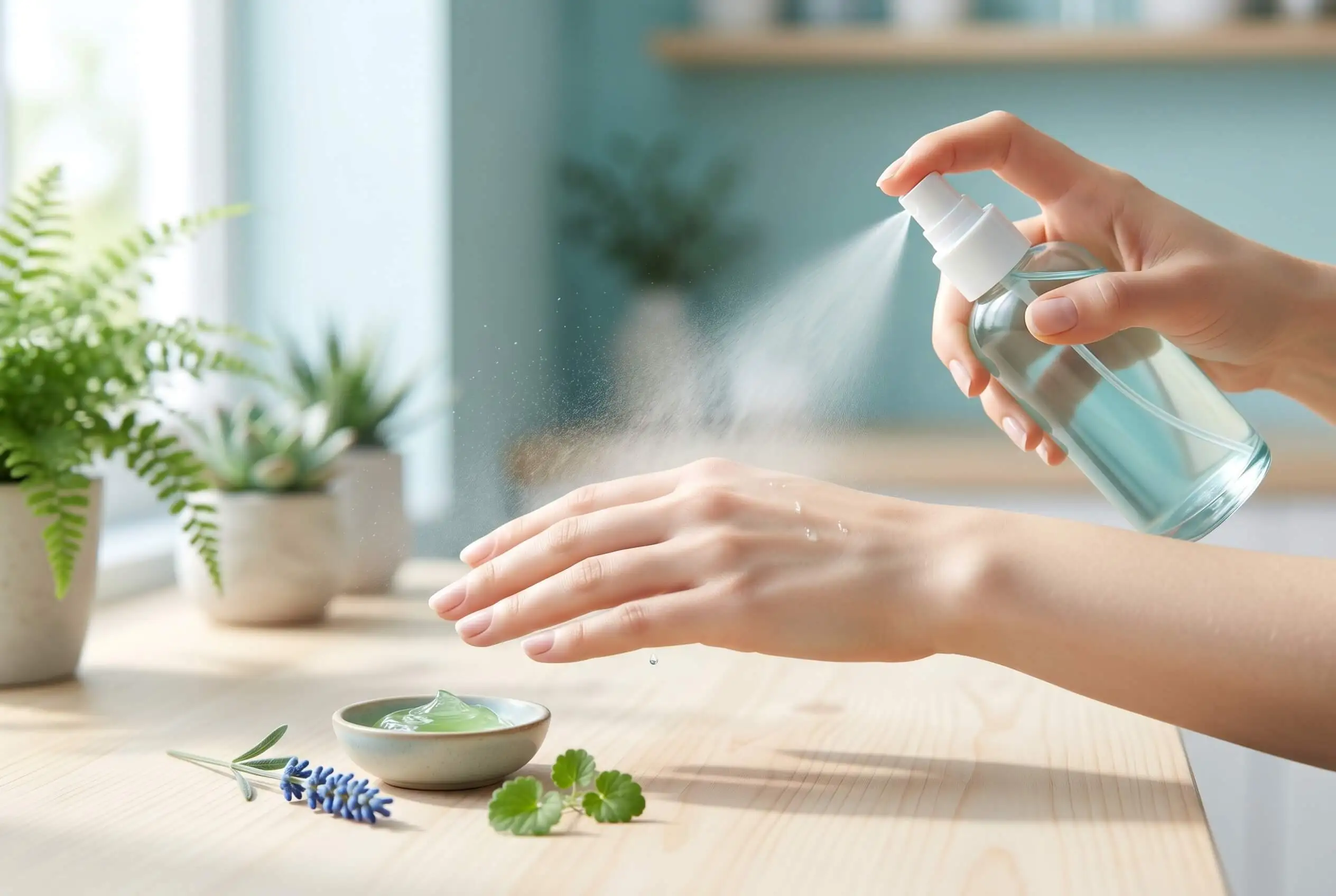
“People come to me sure they have problem hands. Most of the time they don't. They have a problem product. I've watched readers fight redness and cracking for years, switch to a fragrance-free soap that actually removes germs instead of only killing them, and then ask why nobody told them sooner. The back of the label tells you everything the front is trying to hide.”
Essential Resources
These are the references I keep going back to. Each one is a primary source you can read yourself before deciding what belongs by your sink.
CDC – Handwashing Facts and Science
The clearest explanation of how soap physically removes germs from skin, and why removing them beats killing them in place.
FDA – Safely Using Hand Sanitizer
What you need to know about alcohol content, methanol warnings, and safe use, plus the products the agency says to skip.
American Academy of Dermatology – Eczema Self-Care
Dermatologist guidance to choose fragrance-free cleansers and to ask about gentle sanitizer options for reactive hands.
National Eczema Association – The Ecz-clusion List
The exact ingredients, fragrance included, that genuinely gentle products leave out. Keep it open while you read labels.
Search any hand product by name and see ingredient-by-ingredient safety scores, including the fragrances the front label never mentions.
Allergic Contact Dermatitis to Fragrances (PubMed)
A clinical review of how common fragrance allergy really is, and which fragrance ingredients trigger it most often.
Irritant Hand Dermatitis in Healthcare Workers (Frontiers in Public Health)
How repeated hand hygiene damages skin, and why swapping in gentler products helps irritated hands recover.
3 Statistics
Soap-based handwashing prevents a lot of illness. The CDC reports that washing with soap cuts diarrhea-related sickness by 23 to 40 percent and respiratory illnesses like colds by 16 to 21 percent across the general population. That payoff comes from physically removing germs, the same principle a good rinse-free soap runs on. Source: CDC.
Fragrance allergy is more common than people think. Research puts fragrance allergy at roughly 0.7 to 2.6 percent of the general population, and fragrance lands among the most common contact allergens overall. If scented products make your hands itch, you have plenty of company. Source: PubMed.
Heavy hand hygiene takes a toll on skin. In one population survey during a stretch of heightened hand hygiene, about 34.8 percent of people reported skin changes on their hands, with frequent handwashing and alcohol-based sanitizer use named as contributing factors. A gentler product is one of the simplest ways to ease that strain. Source: PubMed.
Final Thoughts and Opinion
After years of testing and writing about these products, here's where I land. Conventional sanitizer was never bad at killing germs. The trouble is that killing germs and cleaning your hands are two different outcomes, and for sensitive skin, that gap is the whole problem. Scented, alcohol-heavy gel leaves residue on the exact hands you're trying to protect. For allergy-prone people, that residue is the next flare waiting to happen.
My honest take: stop hunting for a gentler sanitizer and rethink the category instead. A fragrance-free, alcohol-free, plant-based soap that lifts germs off your skin gives you clean hands without the ingredients that caused the trouble in the first place. Keep a mild fragrance-free soap by the sink for home. Carry a rinse-free option for everywhere else. As a simple home improvement for healthier daily routines, that pairing has solved the irritation problem for more readers than any single product on a drugstore shelf.
Frequently Asked Questions
What can I use instead of hand sanitizer if I'm allergic to fragrance?
A fragrance-free, alcohol-free option that physically removes germs rather than killing them in place. A rinse-free, plant-based soap is the gentlest everyday choice, and mild fragrance-free soap and water works whenever a sink is nearby.
Is fragrance-free the same as unscented?
No. Fragrance-free means no fragrance ingredients were added. Unscented can still contain a masking fragrance used to hide a product's natural smell, which is why some unscented products still trigger reactions.
Are alcohol-free hand sanitizers safe for eczema?
They're usually gentler, since alcohol is a major cause of dryness and stinging on eczema-prone skin. Still check for added fragrance and preservatives, and patch-test before regular use.
Does a hand sanitizer alternative kill germs as well as gel?
A quality rinse-free soap removes germs, dirt, and oil by lifting them off the skin. Health authorities note this works especially well on visibly dirty hands, where alcohol gels lose ground. For everyday cleaning, removal works at least as well and leaves nothing behind.
What ingredients should allergy-prone users avoid?
Added fragrance, including “natural” essential oils, plus high concentrations of ethyl or isopropyl alcohol, parabens, formaldehyde-releasing preservatives, and added dyes. The National Eczema Association's Ecz-clusion List is a handy reference.
Give Your Allergy-Prone Hands a Break
Your skin shouldn't pay the price for staying clean. If scented, alcohol-heavy gel has left your hands raw, switch to a gentler approach that removes germs without the irritation. Start with a fragrance-free, rinse-free plant-based soap, and you'll likely feel the difference within the first few days. See how the rinse-free plant-based hand sanitizer alternative works and give your hands the gentler option they've been asking for.