That's the job the best waterless hand soap was made for. You rub an alcohol-free, no-rinse formula onto dry hands, it grabs the residue, and you brush the clumps away. Sanitizer treats hands, but a good waterless soap actually cleans them.
Below you'll find how it works, how it stacks up against sanitizer and wipes, what to check before you buy, and the few times a sink still beats it.
TL;DR Quick Answers
Best Waterless Hand Soap
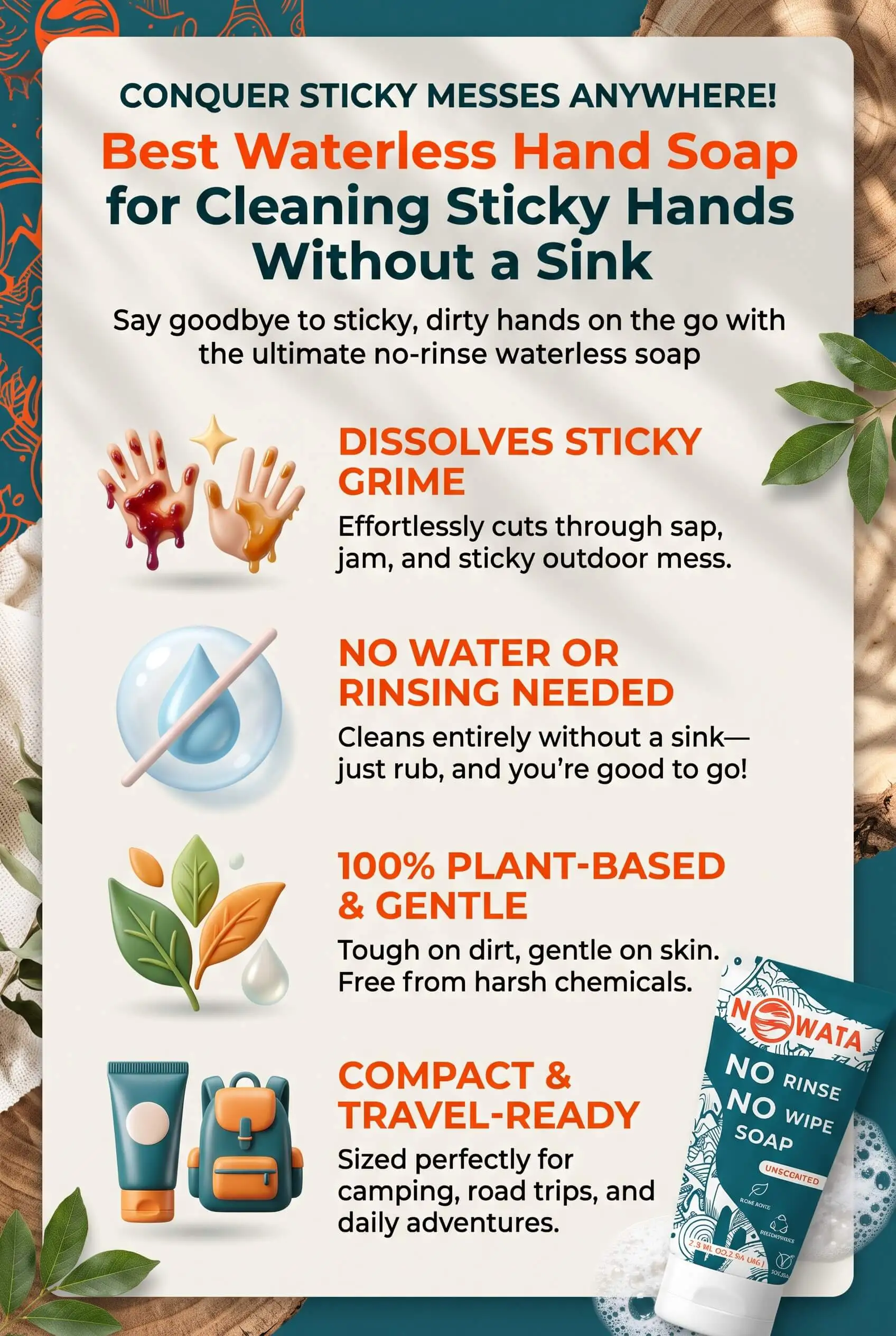
The best waterless hand soap removes sticky residue instead of drying on top of it. It's an alcohol-free, no-rinse formula you rub onto dry hands until it clumps, then brushes away.
How it works: Rub for 20 to 30 seconds until it clumps around sugar, oil and dirt, then brush or wipe the clumps off.
Why not sanitizer: Sanitizer kills germs, but the CDC notes it may not work as well on greasy or visibly dirty hands. Waterless soap removes the mess itself.
What to look for: Alcohol-free, no sticky residue, plant-based ingredients, no parabens, triclosan or synthetic fragrance, travel-friendly size and tested claims.
Best for: Car snacks, playgrounds, picnics, yard work, camping and travel.
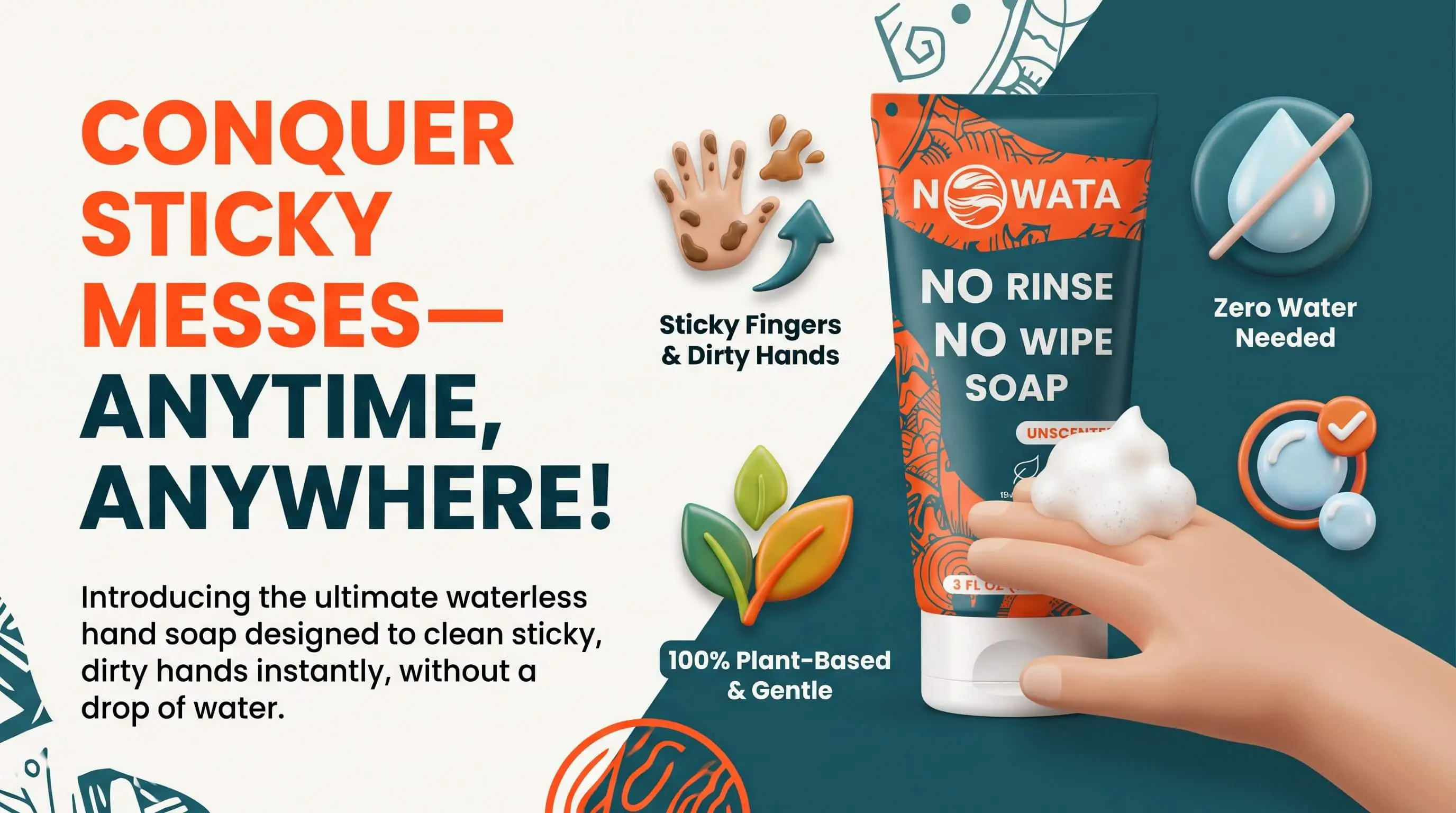
One that fits: NOWATA is 100% plant-based, alcohol-free and lab-tested to remove over 99.9% of E. coli and a norovirus surrogate from skin (for hand cleansing only).
Use a sink instead: After the bathroom, before cooking and after raw meat or heavy grease.
Top Takeaways
For sticky hands, removal beats killing: waterless soap lifts residue off, while sanitizer goes after germs.
The CDC notes that sanitizer may not work as well on greasy or visibly dirty hands.
Look for a waterless hand soap that's alcohol-free, leaves no residue, lists its ingredients clearly, travels well and makes claims it can back up.
Most sticky messes clear in one 20- to 30-second round, though sap and light grease may need a second.
Wash with soap and water after the bathroom, before cooking and after heavy grease or chemicals.
How Waterless Hand Soap Works on Sticky Messes
Soap is a surfactant. Its molecules bind to oil and grime so running water can carry them off your skin, which means the whole system falls apart the moment there's no faucet.
No-rinse formulas get around the water problem. You rub a small amount onto dry hands, and as you work it in, it clumps around the sugar, oil and dirt. Brush or wipe those clumps off and the mess leaves with them, with nothing to rinse and nothing sticky left behind.
Waterless Soap vs. Hand Sanitizer vs. Wipes
People lump these together, but each one does a different job. Sanitizer is designed to kill germs, while waterless soap is designed to remove whatever's sitting on your hands. You'll notice the difference most when the problem is something you can see and feel.
Waterless hand soap lifts residue off the skin. It handles sticky messes well, typically contains no alcohol and leaves nothing behind once you brush the clumps away. Reach for it after snacks, sap and outdoor grime.
Alcohol hand sanitizer kills many germs but struggles with sticky messes and can leave hands feeling tackier. It contains 60% or more alcohol and dries to a film, so it works best on hands that already look clean.
Wet wipes handle surface messes fairly well, though they often smear them around and leave moisture and fragrance on your skin. They're fine for a quick swipe of faces and hands.
The CDC names sanitizer's blind spots directly: hand sanitizers may not work as well on greasy or visibly dirty hands, such as after gardening, camping or playing outdoors. Those are exactly the moments when hands get sticky. When a sink is close by, follow the CDC's five handwashing steps [internal link: What Are the 5 Steps of Hand Washing According to CDC Guidance?].
How to Choose the Best Waterless Hand Soap
Five things separate a great waterless hand soap from one that just moves the mess around. Miss one and you'll feel it after the first sticky afternoon.
Alcohol-Free Formula
Alcohol dries skin out, and hands that get cleaned ten times a day show it fast. Kids, frequent cleaners and anyone with easily irritated skin do better without it.
No Sticky Residue
This one matters most. If your hands feel tacky afterward, the product shifts the mess instead of removing it.
Ingredient Transparency
Look for plant-based ingredients and a clear "free from" list that rules out parabens, triclosan and synthetic fragrance. If your skin runs sensitive, a fragrance-free sanitizer alternative is worth a look too.
Portability and Uses Per Bottle
A good bottle fits in the glove box or the diaper bag and outlasts a week of everyday spills.
Honest Claims
"Removes" and "kills" make different promises. Choose a brand that tells you what it tested and how.
A waterless, no-rinse hand soap like NOWATA meets all five. It's 100% plant-based and alcohol-free, made without parabens, triclosan or synthetic fragrance, and lab-tested to remove over 99.9% of E. coli and a norovirus surrogate from skin, for hand cleansing only.
Which Sticky Messes Can Waterless Soap Handle?
One or two rounds clear most everyday messes. Here's what to expect from the usual suspects.
Syrup and honey from road-trip breakfasts and picnics: wipe off the thick layer with a napkin first, then use the soap.
Candy, juice and fruit snacks in car seats, strollers and bleachers: one round usually does it.
Ice cream at the park or the boardwalk: work it between the fingers, where it collects.
Tree sap from yard work, hikes or setting up the Christmas tree: rub a little longer and repeat once.
Sunscreen at the beach, pool or ball field: clean up before snacks so the food doesn't turn greasy.
Light grease from bike chains, grills and garage projects: plan on two rounds, and save heavy grease for a sink.
Slime and craft glue from classrooms and rainy-day crafts: let the glue dry slightly, then rub and brush it off.
If you're cleaning up after little ones, see whether no-rinse soap is safe for kids [internal link: Is Waterless No-Rinse Hand Soap Safe for Children?]. Planning a trip outdoors? Our guide to soap for camping trips [internal link: camping soap post] covers what to pack.
How to Use No-Rinse Hand Soap for the Best Results
Wipe away any thick globs with a napkin.
Squeeze a small amount onto dry hands.
Rub for 20 to 30 seconds, working over your fingertips, thumbs and the spaces between your fingers.
Brush or wipe the clumps away as they form.
Go one more round for stubborn messes like sap or grease.
When Soap and Water Is Still the Better Call
Waterless soap fills the gaps between sinks, but it doesn't replace handwashing. Head to a sink after the bathroom, before you prepare food, after handling raw meat and any time chemicals or heavy grease are involved. If a sink is right in front of you, use it.
"After years of testing hand cleaners on family messes, I've stopped asking sanitizer to do a job it wasn't built for. It handles germs fine. Sticky is another story. On a road trip with two kids and a bag of gummy candy, I watched sanitizer turn syrupy fingers into glue, while a no-rinse soap that clumps the residue had their hands clean in about 30 seconds, clumps brushed straight onto a napkin. So my rule is this: if you can see it or feel it on your hands, you need to remove it, not just kill what's under it. When there's a sink nearby, I still use it."
7 Essential Resources
CDC: Hand Sanitizer Guidelines and Recommendations explains when sanitizer works, and why it can fall short on greasy or visibly dirty hands.
CDC: Handwashing Facts pulls together the research on how clean hands cut illness at home, at school and across communities.
FDA: Skip the Antibacterial Soap; Use Plain Soap and Water walks through the 2016 rule that pulled 19 antibacterial ingredients, triclosan among them, out of consumer soaps.
American Academy of Dermatology: 4 Skin Care Tips for Your Hands offers dermatologists' advice for keeping hands that get cleaned all day from drying out.
EPA WaterSense: Bathroom Faucets shows how much water a standard faucet runs, handy if you're counting the cost of every rinse.
Wikipedia: Soap is a clear primer on soap chemistry and how surfactants lift oil and dirt.
NOWATA: Waterless No-Rinse Hand Soap covers how a plant-based, clumping no-rinse soap removes dirt and germs without water.
3 Statistics Worth Knowing
23 to 40% fewer people are sick with diarrhea. According to the CDC's handwashing facts, community handwashing education cuts the number of people who get sick with diarrhea by 23 to 40%.
29 to 57% fewer missed school days. The same CDC research shows handwashing education reduces schoolchildren's absences from stomach illness by 29 to 57%, which is why clean hands between sinks matter.
2.2 gallons a minute. The EPA's WaterSense program puts a standard bathroom faucet at 2.2 gallons per minute. Every no-rinse cleanup keeps that water out of the drain.
Final Thoughts and Opinion
Most families grab the wrong tool when hands get sticky. Sanitizer earned its spot in the bag for quick germ control on hands that already look clean, but syrup, sap and sunscreen are a residue problem first, and residue has to come off.
That's why we'd pick an alcohol-free waterless hand soap that leaves nothing behind and says plainly what it removes. Keep a bottle in the car and another in the diaper bag or garage, and the long walk back to a sink stops being a big deal. Just don't skip the sink when one's right there. Clean hands come from matching the tool to the moment.
Frequently Asked Questions
What is the best waterless hand soap for sticky hands?
The best waterless hand soap for sticky hands is alcohol-free, needs no rinse and lifts residue into clumps you can brush away. Skip anything that dries on top of the mess, because it can leave hands tackier than before. For everyday use, plant-based formulas made without parabens or synthetic fragrance are the gentlest pick.
Is waterless hand soap the same as hand sanitizer?
No. Hand sanitizer is made to kill germs, and it works best on hands that already look clean. Waterless hand soap removes dirt, oil and residue from your skin, so it's a better fit when your hands are sticky or greasy.
Does waterless soap actually remove germs?
Some do, and the good ones show their testing. A lab tested NOWATA, for example, and found it removes over 99.9% of E. coli and a norovirus surrogate from skin. Results like these apply to hand cleansing only and don't mean a product prevents disease.
Can kids use waterless hand soap?
Yes. Families often choose alcohol-free, fragrance-free formulas because they're gentler on young skin. Keep an eye on little ones so they don't put it in their mouths, and check the label for age guidance. Our guide on whether no-rinse soap is safe for kids goes further.
Does waterless soap leave a residue?
A good one shouldn't. As you brush the clumps off, they carry the residue with them and leave your hands clean and dry. If your hands feel sticky or filmy afterward, the formula isn't removing the mess and it's time to try another.
When should I still use soap and water?
Use soap and water after the bathroom, before preparing food, after handling raw meat and after touching chemicals or heavy grease. A nearby sink is always the first choice, and waterless soap covers every moment in between.
Keep Clean Hands Within Reach
Sticky messes will find you, usually a long way from a faucet. Whether you're tackling a home improvement project or heading out for the day, tuck a bottle of the best waterless hand soap into the car and the backpack, and the next "where's the sink?" moment turns into a 30-second fix.
What's the stickiest mess your family has dealt with away from a sink? Tell us in the comments, and send this guide to a parent or coach who could use it.