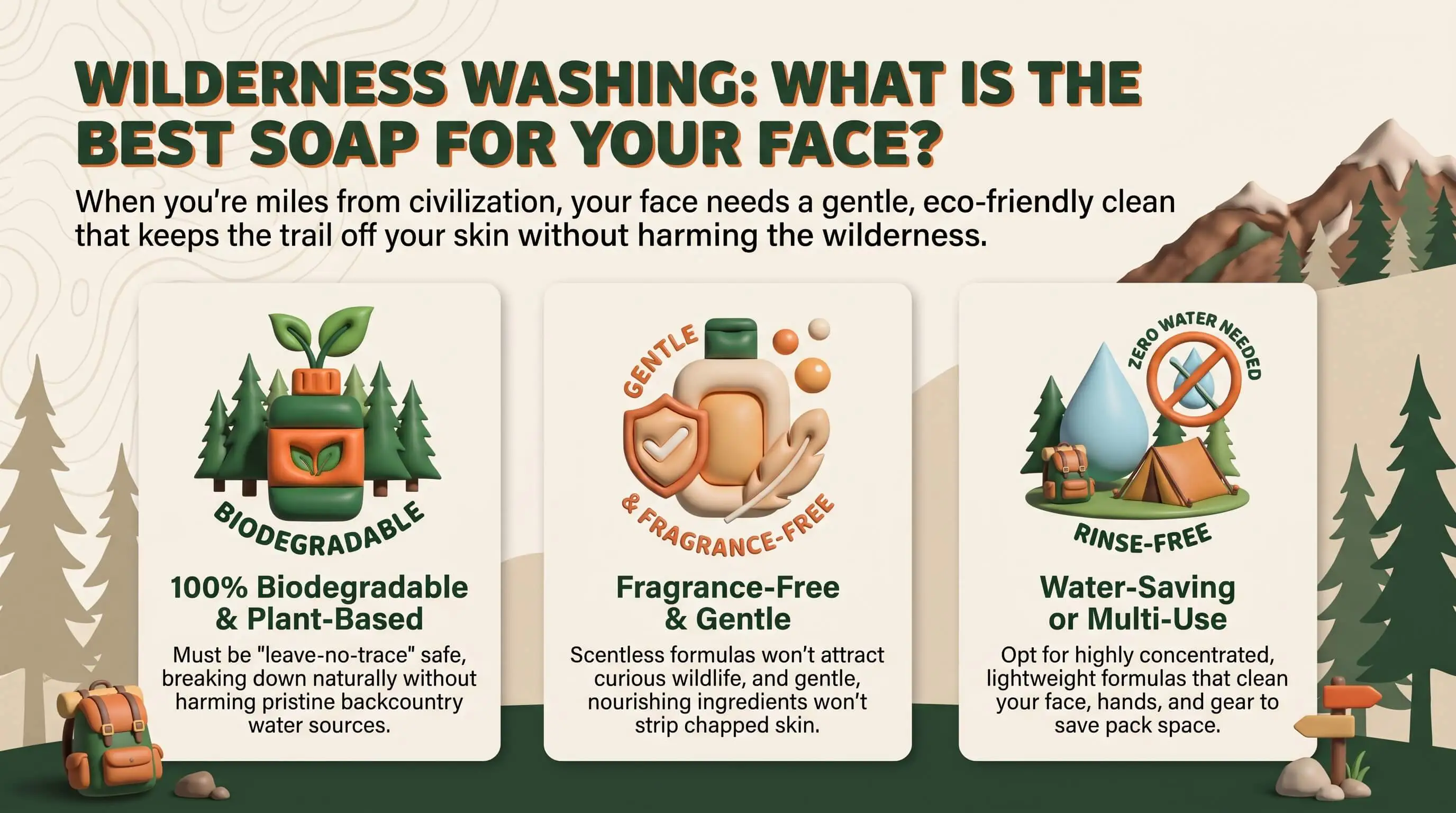
Here's the fix. Pack a gentle, fragrance-free, alcohol-free biodegradable soap, such as soap leaves or a few drops of mild liquid, and use only a little. Carry your water at least 200 feet from any lake or stream, wash there, and scatter the greywater on the ground.
You get a clean face without giving up a light pack or a tight water budget, and the backcountry looks the same after you leave. Below, you'll find which soaps treat facial skin well, how to wash without wasting water, how the best waterless hand soap fits into your routine, and how to keep it all within Leave No Trace.
TL;DR Quick Answers
Best Soap for Backpacking and Hiking
The best soap for backpacking and hiking is a two-part kit: a rinse-free hand cleaner for your hands and a gentle, fragrance-free biodegradable soap for your face. The hand cleaner saves your carried water, and the face soap stays kind to your skin and to the water around you.
For hands: a rinse-free, plant-based cleaner like NOWATA. It needs no water and leaves no greywater. For hand cleansing only.
For your face: soap leaves or a few drops of diluted unscented castile.
Amount: one leaf or a pea-sized drop, with less than a cup of water.
Where: at least 200 feet, or about 70 steps, from lakes and streams.
Disposal: scatter used water on land and pack out every wipe.
Skip: scented soaps, alcohol sanitizer on your face, and soap in any water source.
Top Takeaways
Pick a gentle, fragrance-free, alcohol-free biodegradable cleanser for your face.
Soap leaves and diluted unscented castile strike the best balance of weight, gentleness, and versatility.
Clean your hands before your face. A rinse-free hand cleaner saves your carried water for the face wash.
Wash at least 200 feet from lakes and streams, which is about 70 steps.
Biodegradable soap still harms water it touches directly, so dispose of it on land.
Wash once a day and after heavy sweating, and keep alcohol sanitizer off your face.
Pack out every wipe.
What Makes a Soap Safe for Your Face on the Trail
A face soap on the trail has two jobs: be kind to your skin and be kind to the water around you. Check for these five traits before anything goes in your pack.
Gentle and alcohol-free. The American Academy of Dermatology recommends a gentle, non-abrasive cleanser that does not contain alcohol. Wind and sun already dry your skin out up there, and a harsh formula only adds to it.
Fragrance-free or unscented. Your face reacts to fragrance faster than your hands do. Scent also gives curious wildlife a reason to visit camp.
Biodegradable. Soil breaks it down when you dispose of it the right way. That still doesn't make it safe to use in a stream.
Lightweight and leak-proof. Soap leaves, powders, and 1 oz bottles weigh next to nothing and won't turn your bag into a slick mess the way a full-size bar can.
Mild on skin pH. True soaps, castile included, run alkaline. Plenty of faces handle that fine. If yours runs dry or sensitive, dilute heavily or reach for a milder cleanser.
Best Soap for Backpacking and Hiking: Face-Friendly Options Compared
No one product wins for every face, so we compare by type. Here's how the usual options hold up when you use them on your face.
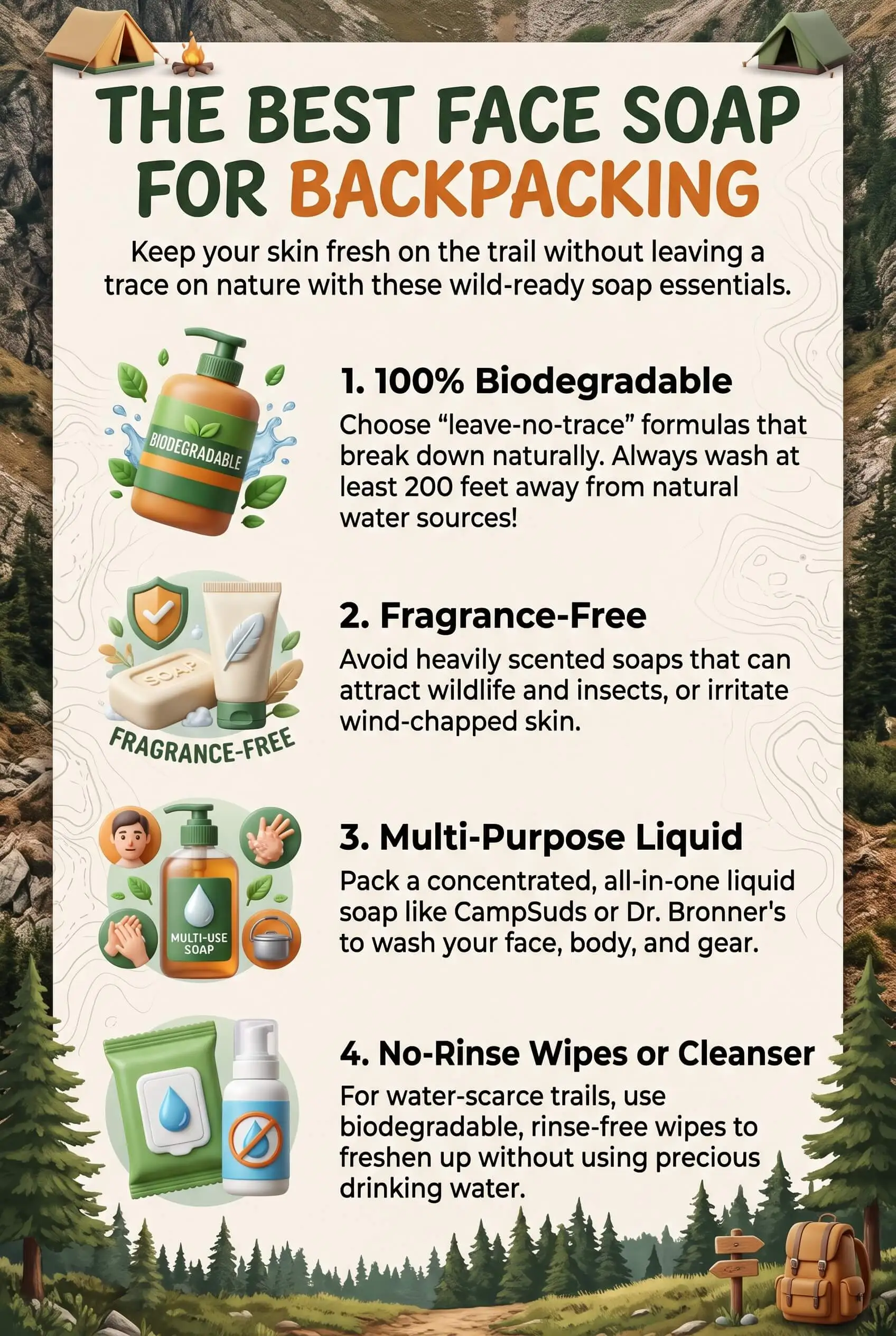
Soap leaves or sheets, such as Sea to Summit Trek & Travel Pocket: Featherlight, can't leak, and need only a splash of water. One leaf handles your face and hands, which makes these very face-friendly. Best for ultralight trips.
Diluted castile liquid, such as Dr. Bronner's Unscented: A small, highly concentrated bottle that needs a moderate amount of water. Diluted, it treats most faces well, though sensitive skin may feel dry afterward. Best for multi-use kits.
Powdered camp soap, such as Pika Summit Suds: A tiny bottle that can't leak and needs a moderate amount of water. Fair on faces, since its makers built it for all-purpose cleaning. Best for gear minimalists.
Gentle no-rinse or micellar cleanser: A small travel tube that needs little or no water and stays gentle on sensitive skin. Best for dry routes and cold nights.
Unscented biodegradable wipes: Gentle and water-free, but bulky, and you have to pack out every one. Best for short trips and emergencies.
Water only: Weighs nothing and takes a splash. Fine for light trail grime, and the go-to for purists and fragile areas.
Our pick for most backpackers is soap leaves or heavily diluted unscented castile, both practical options when looking for an all natural non toxic hand soap. They're light and gentle enough for daily use, and they make it easy to stay inside Leave No Trace limits.
How to Wash Your Face While Backpacking in 5 Steps
A good trail face wash takes about two minutes and less than a cup of water.
Start with clean hands. All day your hands grip trekking poles, pump your filter, and dig in the dirt, and they carry that grime straight to your face. A rinse-free cleanser like the best soap for backpacking and hiking cleans your hands without spending a drop of water, so every ounce you carry goes to your face. NOWATA is for hand cleansing only. Use it for this first step, then switch to a face-safe soap.
Carry water away from the source. Fill a collapsible bowl or bottle and walk at least 200 feet from lakes and streams. That's about 70 adult steps.
Wet and lather gently. Splash your face with cool or lukewarm water. Rub a pea-sized amount of soap, or one soap leaf, between your fingertips and massage it in without scrubbing.
Rinse and pat dry. Pour slowly from your bottle or use a damp bandana. Pat dry with a clean cloth you keep just for your face.
Dispose and protect. Scatter the used water widely or pour it into a cathole. Then put on sunscreen or a light moisturizer.
Leave No Trace Rules for Face Washing
The Leave No Trace framework gives outdoor users seven principles for protecting wild places, and one of them covers waste, wash water included. For washing, the rule is simple. Carry your water 200 feet from lakes and streams and use small amounts of biodegradable soap.
Most hikers slip on the word "biodegradable." When soap reaches water directly, its surfactants and nutrients still harm fish and aquatic insects. Soil filters it and breaks it down, so you want it on land and well away from the shore. In fragile spots like desert potholes and alpine lakes, cut back on soap, use a sulfate-free hand soap when needed, or skip it and rinse with water alone.
Common Face-Washing Mistakes on the Trail
Lathering up at the edge of a lake or stream.
Wiping alcohol hand sanitizer on your face, which strips moisture and stings.
Washing too often. Once in the evening, plus after heavy sweating, covers most hikers.
Packing scented products into bear country.
Drying your face with the bandana you use for sweat and dishes.
Building a Minimal Trail Face-Care Kit
Your whole face-care kit can come in well under 5 ounces:
Soap leaves or a 1 oz bottle of unscented castile
A rinse-free hand cleaner for the clean-hands step
A collapsible bowl or spare bottle for carrying water
One small bandana or towel that only touches your face
Sunscreen and an SPF lip balm
"After years of multi-day trips, I've learned that the order you wash in matters more than the soap you pick. It's a simple home improvement habit I've carried into my backpacking routine. When I see trail breakouts, dirty hands are usually the cause, far more often than the wrong cleanser. You spend the day gripping poles, pumping filters, and digging catholes, then you rub all of it into your face. So I clean my hands first with a rinse-free cleanser and save my carried water for my face. One soap leaf, a cup of water, and a bandana that never touches anything else. I go fragrance-free and 200 feet from the creek every single time. That two-minute habit is what gets me home with clear skin and not a rash."
7 Essential Resources
These are the pages we'd bookmark before heading out.
Leave No Trace overview. The seven outdoor ethics principles the Leave No Trace Center for Outdoor Ethics laid out in 1994, in one readable page. Source: Wikipedia
The 200-foot rule from the people who wrote it. Step-by-step wastewater disposal for backcountry dishes, and the same steps work for your face. Source: Leave No Trace Center for Outdoor Ethics
How dermatologists wash a face. Gentle cleansers, lukewarm water, fingertips only, and a pat dry. Source: American Academy of Dermatology
All seven principles, made practical. Includes how to wash yourself away from streams and lakes. Source: REI Expert Advice
A face-first routine from a seasoned backpacker. Top-down cleaning with unscented soap and very little water. Source: The Mountaineers
A one-page federal reference. It's worth saving your phone before a trip on public land. Source: Bureau of Land Management
Independent trail soap comparisons. Soaps sorted by type, use, and price per ounce. Source: Treeline Review
3 Statistics
About 63 million people in the U.S. went hiking in 2024, which makes hiking the most popular outdoor activity the Outdoor Industry Association measures. That's a lot of faces sharing the same trails and water sources. Source: Backpacker
Handwashing education cuts the number of people who get sick with diarrhea by 23% to 40%, according to the CDC. That's why clean hands come first. Source: CDC
Acne affects nearly 50 million Americans each year, and it's the most common skin condition in the United States. A gentle trail routine keeps you from adding a backcountry breakout to that count. Source: American Academy of Dermatology
Final Thoughts and Opinion
Here's our honest read. The best soap for washing your face while backpacking is the one you barely notice. It's unscented and gentle, it weighs close to nothing, and you use so little that the trail never notices it either. For most hikers, that's soap leaves or a few drops of diluted castile.
The routine matters more than the bottle. Clean your hands first, carry your water 200 feet out, wash gently, and scatter what's left. Stick to that order and almost any face-safe soap will serve you well, whether you're out for a weekend loop or a month on the trail.
Frequently Asked Questions
Can I wash my face in a lake or stream with biodegradable soap?
No. Biodegradable soap only breaks down properly in soil, and in water it can still harm fish and aquatic insects. Collect your water in a bowl or bottle, walk at least 200 feet from shore, and wash there. Then scatter the greywater widely on the ground.
Is Dr. Bronner's castile soap safe for my face?
For most people it is, as long as you dilute it. Castile soap runs alkaline, so sensitive or dry skin can feel tight afterward. Go with the unscented version, mix one or two drops with water, and rinse well. If your face still feels tight, switch to soap leaves or a milder cleanser.
How often should I wash my face while backpacking?
Once a day covers most hikers, usually in the evening at camp. Add a quick rinse after heavy sweating, especially under a hat or helmet. Wash more than that and you strip the natural oils your skin needs against wind and sun.
Can I use hand sanitizer on my face?
Skip it. Alcohol-based sanitizer dries and irritates facial skin and stings near your eyes. Keep it, or a rinse-free hand cleaner, for your hands, and wash your face with a gentle soap and a little water.
Is water alone enough to clean my face on the trail?
Often, yes. A splash of water and a clean bandana take care of light sweat and dust. Reach for soap when you need to lift sunscreen, bug spray, or heavy trail grime. In fragile areas, plain water leaves the lightest mark.
What is the best soap for backpacking and hiking if I only want to carry one?
A small bottle of unscented castile covers the most ground. At heavy dilution it handles your face, your body, and your dishes. Add a rinse-free hand cleaner if you want to stretch your water further.
Can waterless hand soap like NOWATA be used on my face?
No. NOWATA is for hand cleansing only. Use it to clean your hands before you wash your face, then switch to a gentle, face-safe soap for your face.
Keep Your Face Fresh and the Trail Clean
Build your face-care kit before your next trip. You need one face-safe eco-friendly soap for camping, a collapsible bowl, a bandana that only touches your face, and a rinse-free hand cleaner for step one. It all weighs a few ounces, and it keeps your skin and the backcountry in good shape.
Got a trail face-washing trick that works for you? Share it in the comments so other backpackers can try it on their next hike.